
Beyond the famous beef and Guinness stews lies a world of traditional culinary staples that look intimidating but are absolutely delicious.
Many international visitors hesitate to try traditional Irish dishes because of their unfamiliar textures, appearances, or ingredients. They prefer safer or more familiar options such as a classic chicken fillet roll or Guinness beef stew.
Skipping these authentic local delicacies means missing out on some of the best, deeply satisfying food the island has to offer. To experience Irish cuisine like a true local, you’ll need to get out of your culinary comfort zone. Here are the five Irish dishes tourists are afraid to try, but absolutely should.
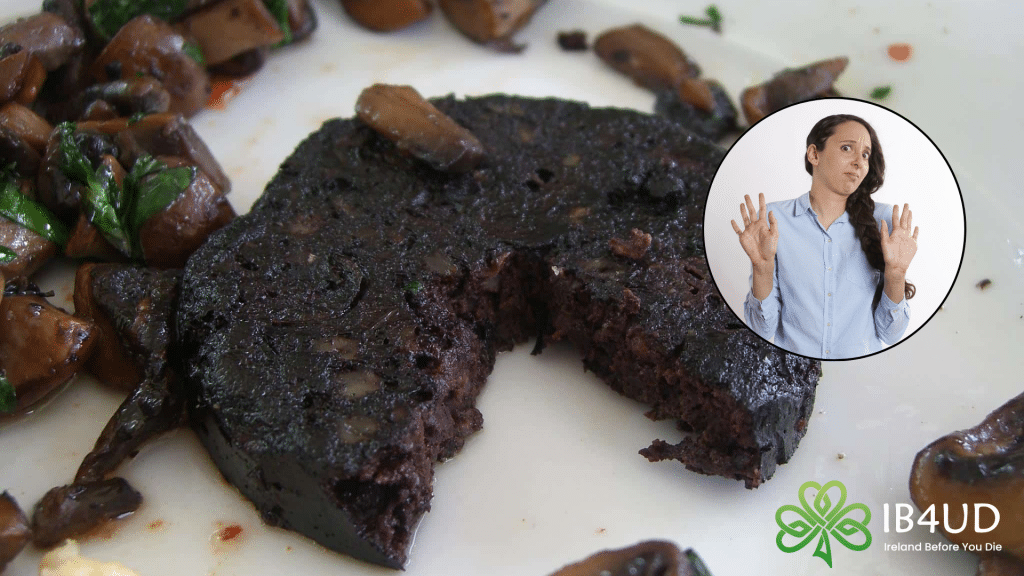
5. Black Pudding – a rich, spiced, and highly comforting breakfast staple

The thought of eating a blood sausage can be unsettling to some people. However, black pudding is a crucial component of a full Irish breakfast. Many tourists politely decline invitations to try black pudding, mostly because of its ingredients.
This traditional delicacy is made from pork fat, blood, oatmeal, barley, and a blend of local spices. The use of blood is what scares off most visitors, who are skeptical about trying it.
Contrary to their imagination, black pudding doesn’t have a slimy, metallic, or copper taste. It has an incredible texture that feels crumbly and dry, thanks to the perfect blend of barley and pinhead oatmeal.
It’s well seasoned with white pepper, coriander, nutmeg, and allspice, giving it a rich, savoury flavour that doesn’t taste like blood.
You can serve it with a fried egg and a slice of buttered soda bread, and you will quickly understand why it’s a non-negotiable part of an Irish morning.
4. Crubeens – crispy, slow-cooked pork trotters packed with local heritage
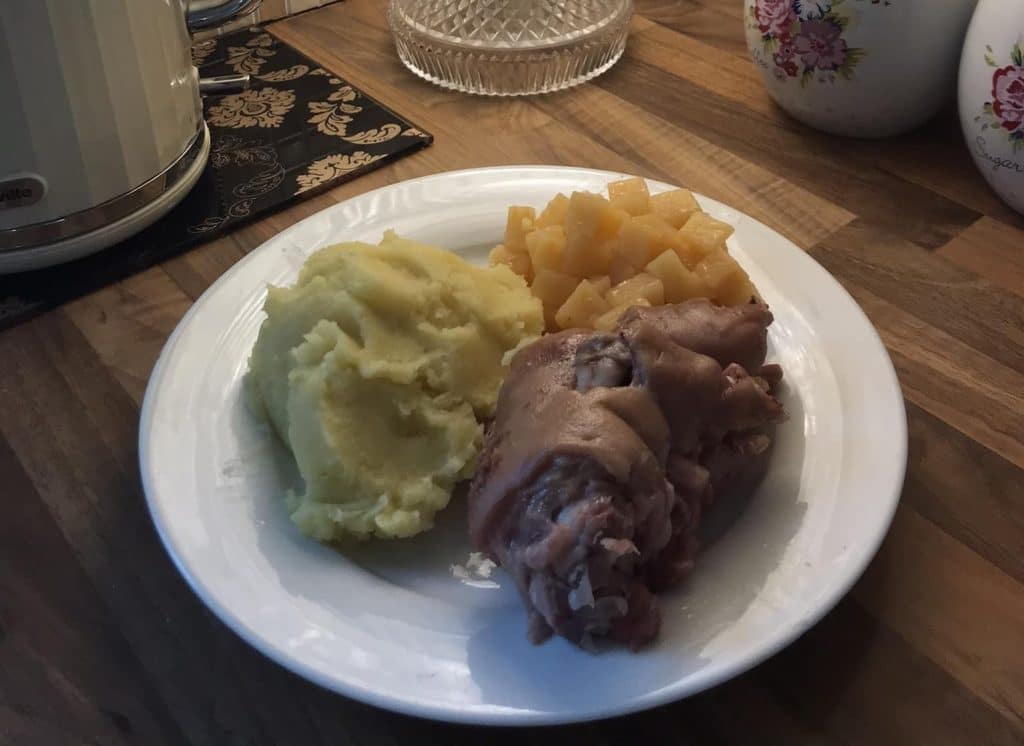
The fear of crubeens originates from its main ingredient, pig’s feet. In the past, this delicacy was popular in Irish homes and pubs.
It was boiled with herbs, rolled in breadcrumbs, and fried until golden and crispy. Modern tourists often find this dish a bit too overwhelming, especially because they have to eat meat directly off a pig’s foot.
If they are not cooked properly, crubeens can feel slimy or rubbery to the uninitiated. There is also very little meat on a pig’s foot. You’ll need to put in a lot of effort to separate the skin, small bones, and cartilage.
However, when cooked by a skilled chef, crubeens have an excellent flavour and texture. The modern method of cooking involves slow boiling them until tender, picking the meat off the bone, and rolling it into cakes.
These cakes are then breaded and deep-fried, resulting in an intensely crispy exterior. If you can look past the ingredients, crubeens are some of the most tender, intensely flavourful pork you will ever eat.
3. Dublin Coddle – a deeply satisfying, classic one-pot dish loved by locals
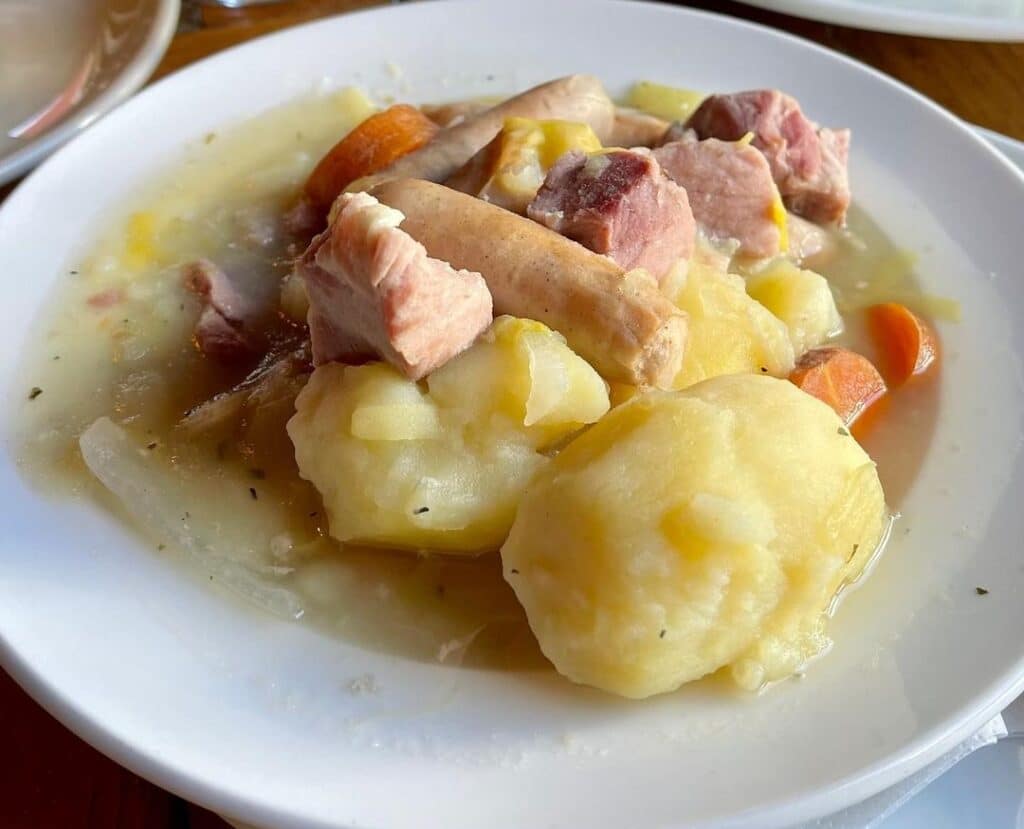
This dish is arguably the most divisive in Ireland, but true Dublin locals fiercely defend it. It has a reputation for looking unappealing to the uninitiated, but it’s a classic working-class meal.
Dublin Coddle is prepared using layers of thick-cut Irish pork sausages, back bacon, potatoes, and onions. Traditional coddle involves boiling or steaming pork sausages and bacon in a broth with potatoes and onions.
Since the process involves low simmering rather than frying, the dish largely deters tourists used to highly appetising browned, grilled meats. While coddle lacks visual appeal, it’s a pure comfort meal worth trying.
If you don’t find the boiled version traveller-friendly, there are various variations, such as pan-seared cooking or the Guinness Coddle.
2. Carrageen Moss Pudding – the ultimate chilled coastal summer dessert
Despite being a sweet treat, carrageen moss pudding strikes fear into many tourists who find the idea of eating a “seaweed” a little too much.
Seaweed rarely comes to mind when people think of dessert. This is due to the expectation that anything from the ocean tastes fishy or salty. Carrageen is traditionally harvested, cleaned, and dried before being boiled in milk.
To create a chilled pudding, the mixture is strained, then mixed with sugar, eggs, vanilla, or a splash of Irish whiskey.
Because it is served completely cold and has a refreshing, silky finish, it’s the perfect traditional sweet treat to enjoy on a warm summer evening.
Unlike modern gelatin desserts made from industrial powders, the carrageen moss pudding is completely natural. If you’re planning a tour along the Irish coast, this traditional Irish dessert is worth trying.
1. White Pudding – the lesser-known, highly versatile breakfast treat
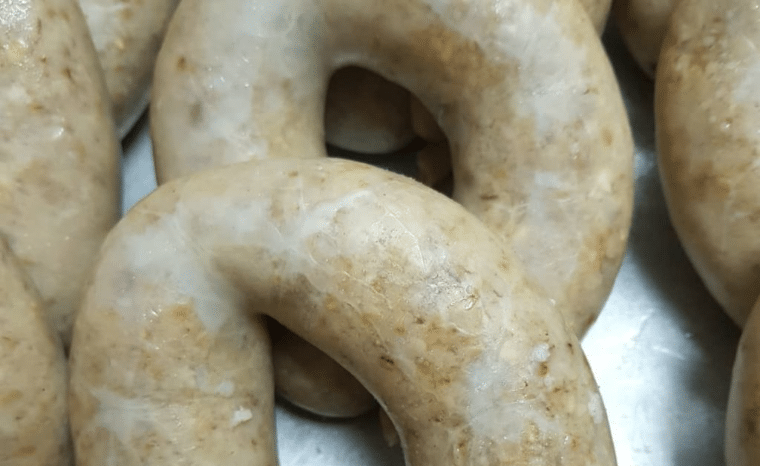
While the black pudding gets all the bad press, white pudding is another traditional sausage that causes confusion and hesitation.
It’s virtually identical to black pudding in terms of its texture, utilising pork fat, toasted pinhead oats, onions, and a unique blend of spices, but it completely omits the blood.
For tourists, the pale, speckled appearance can look mysterious and unfamiliar on a breakfast plate. Because it leaves out the blood, white pudding has a much milder, creamier, and distinctly peppery pork flavour.
White pudding is the perfect alternative for cautious tourists. It delivers all the familiar flavours of a regular pork sausage without any of the intimidating ingredients found in other traditional Irish dishes.