
Pouring the perfect Guinness isn’t magic. It’s a blend of science and art.

The science behind that creamy head lies in a precise, multi-step process that relies on a set of skills and, first and foremost, a respect for tradition.
The iconic “head” on a Guinness is not just visual; it is the scientific key to its smooth texture and balanced flavour.
After reading this article, you will be able to tell the quality of your pint even before the first sip.
The perfect two-step pour – the science behind that brief moment of patience

The perfect pour depends above all on a respect for tradition. A quality pint must follow all the essential steps to achieve impeccable taste, texture, and presentation.
Start by choosing the right Guinness Gravity glass (preferably one that’s clean and cool), then hold the glass at a 45-degree angle under the tap to pour until the glass is two-thirds full.
Next comes the most important step: letting the first pour settle.
A proper settle takes about 90–120 seconds. The goal is to let the nitrogen bubbles “sink” while the darker liquid rises, creating the characteristic cascade effect, until the stout turns uniformly dark.
Only then can you pour the last third of the drink. The top-up will form a slight dome with an ideal head of 12 to 18 mm (1/2 inch to 3/4 inch), with a clean separation between the head and the body.
What the head brings to the pint – the “cream” that shapes the taste, aroma, and texture of every sip

A perfectly poured Guinness will taste different. Each step is essential to unlock Guinness’ full character.
Guinness uses a mixture of nitrogen and carbon dioxide, which produces finer bubbles and that smooth mouthfeel for which it is so famous. Pouring in two stages allows the nitrogen-driven surge to settle and form a stable, dense head, giving the drink its smooth texture.
The same goes for the aromas, as the dense head slows the release of flavours of roasted barley and malty notes that characterise the stout.
Finally, a perfect pouring technique will result in a flawless Guinness, characterized by a dark, velvety body topped with a rich, creamy head.
However, appearance is not merely a matter of aesthetics; it also provides clues about the taste: too much cream may mute aromas; too little cream indicates the stout will taste flat.
The care, skill, and patience demonstrated during the settling process allow one to appreciate the drink all the more, as they transform it into a true ritual.
The first sip – cold, creamy, dense…perfect
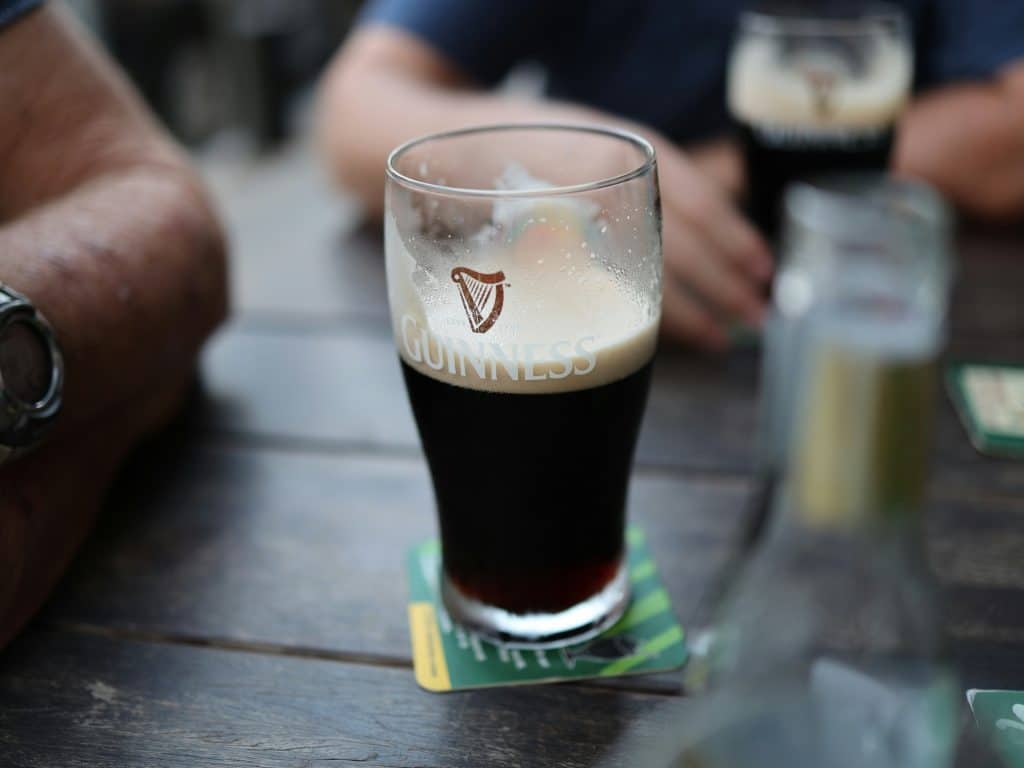
The moment of truth comes when you take that first, well-deserved sip of Guinness.
That’s when patience pays off… or not. If you’ve witnessed all the steps described above, you are likely to enjoy the rich flavours and creamy texture that characterize the famous stout.
While pouring technique is essential for a perfect beer, other factors also play a crucial role in the perfect pint. Temperature, ideally between 4 and 5°C (41–42 °F), proper keg storage, and flow rate can all turn a perfect pint into a mediocre one.
However, the likelihood that the bartender follows proper pouring techniques often ensures that tradition and quality are upheld and that you won’t end up drinking a tourist-trap pint.
There is only one way to tell: first, take a small sip to savour the light head of cream, then immediately take a large sip of beer until you split the G. The final test of a properly poured Guinness is to check, after the first few sips, whether the foam ‘sticks’ to the sides of the glass (known as lacing), which confirms that it was poured correctly.
Knowing the science behind the perfect pour is the best way to enjoy a creamy pint of Guinness, whether in Ireland or in other countries where Guinness is highly regarded.
Sláinte!