Ireland features several remarkable ancient stone circles that hide ancestral and sacred passages.
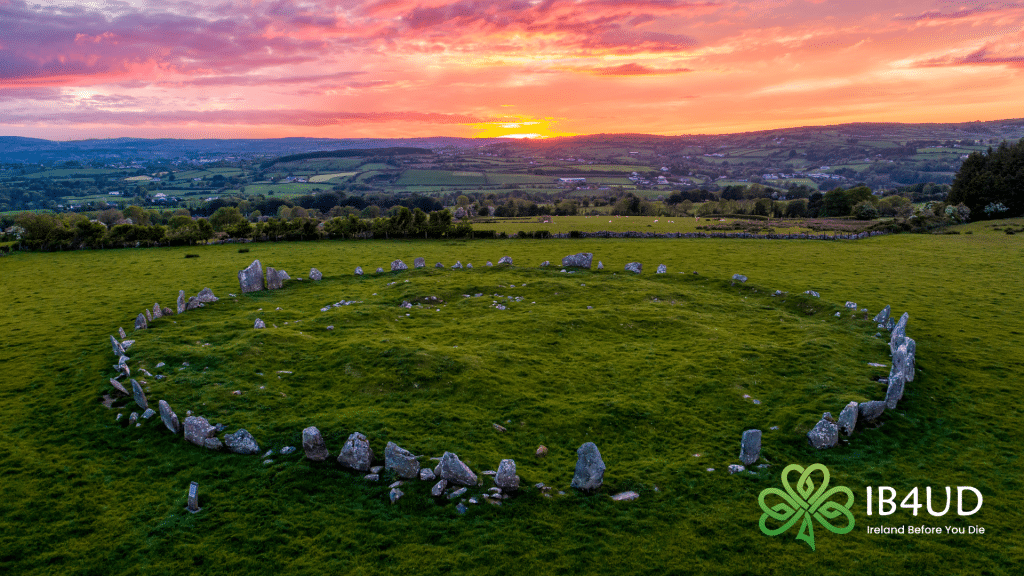
Dating back to the Bronze Age, these large monoliths were erected in mysterious patterns, incorporating the surrounding landscape into their structure.
Whilst some agree that they formed astronomical landmarks, others claim that these atmospheric sites were doors to spiritual realms and sites of magical ceremonies.
Let’s delve into the five most captivating ancient stone circles scattered across Ireland.
5. Drombeg stone circle – known as the “Druid’s Altar”
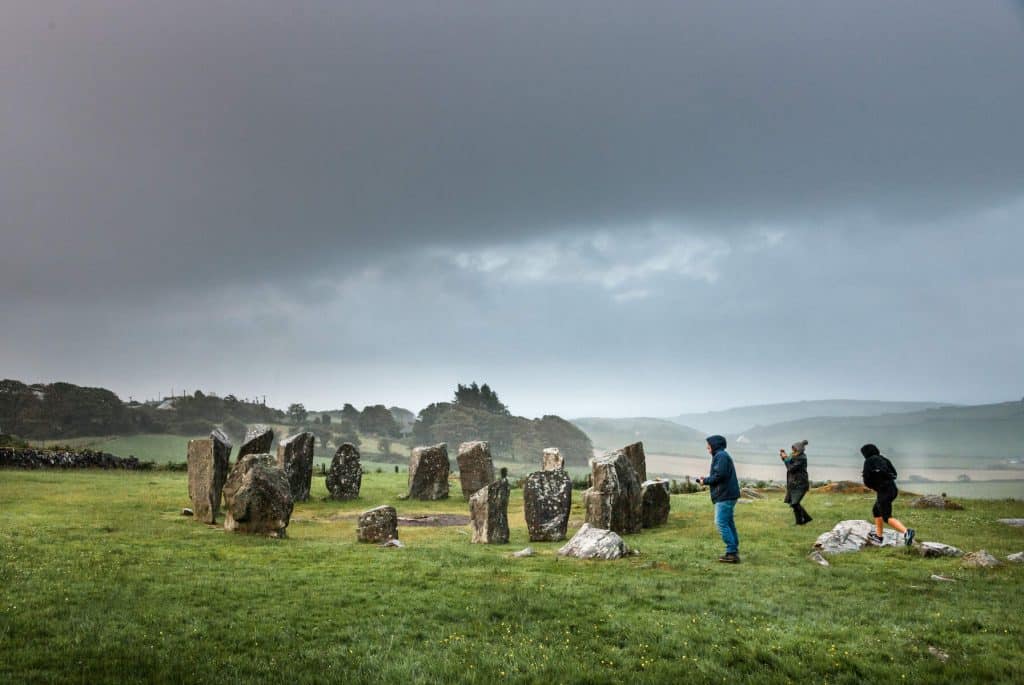
Located near Glandore in County Cork, the Drombeg stone circle is one of the most well-preserved stone circles in Ireland.
The structure has been in use since about 1100-800 BC, with 17 original upright stones, the tallest of which has two shallow cup-marks, one with a carved oval motif.
During the winter solstice, the setting sun sinks directly into a V-shaped notch carved into the distant hills. It casts a long, spectacular shadow that passes precisely through the stones of the gateway to rest upon the central axial stone.
Although locals commonly refer to it as ‘the Druids’ Altar’, excavations have revealed that this stone circle could have served not only as a seasonal calendar for farmers, but also as a site for commemorative and sacred ceremonies predating the arrival of the Druids.
4. Beltany stone circle – tied with ancient fire festival
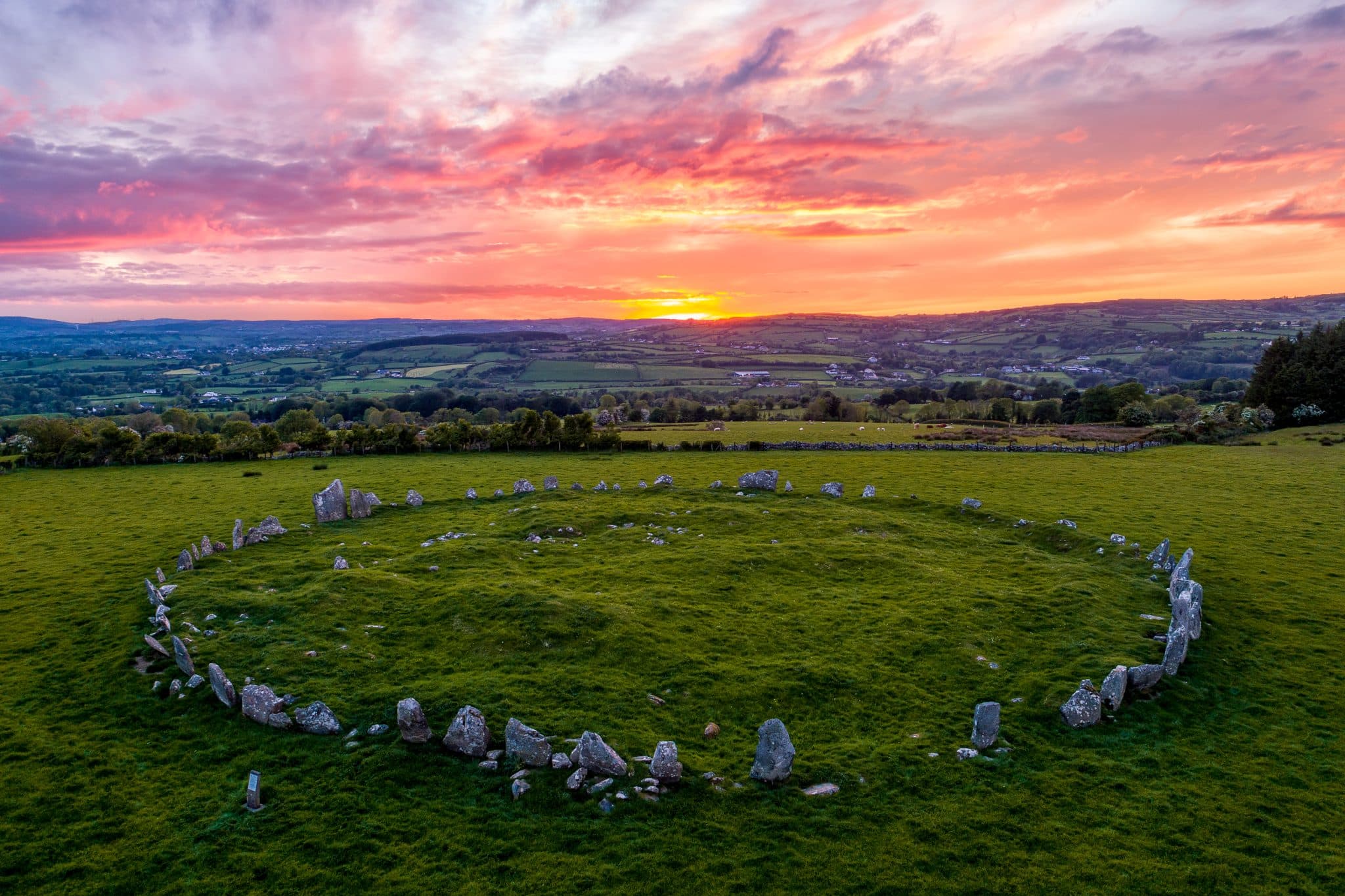
Perched on a hill offering breathtaking views on the outskirts of Raphoe, in County Donegal, the Beltany stone circle now comprises about 60-65 standing stones. According to Celtic legends, it overlooks Magh Itha, the ancient site where Ireland’s first battle took place.
Once again, the site goes beyond the periodic statement, as Beltany could have been a megalithic passage tomb. Although this has not yet been scientifically proven, according to locals, the mound of earth in the centre covered graves.
Moreover, the word ‘Beltany’ likely derives from the ancient Beltaine Fire Festival that occurred in May. The Fire Festival of Beltaine would have been associated with the lighting of fires on hilltops, as if to rekindle the sun’s flame.
3. Ballynoe stone circle – a passage to the realm of the dead
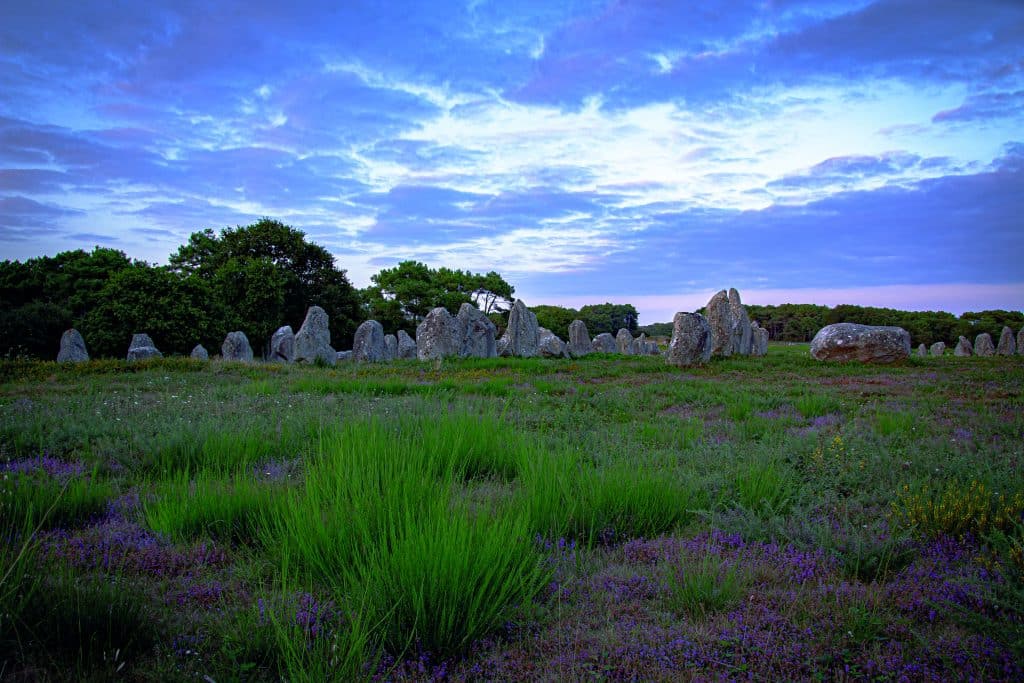
Located in County Down, the Ballynoe stone circle is a complex monolithic site comprising a circle of 50 stones, an elongated burial mound containing a stone cist, and a stone slab uncovered during archaeological excavations.
Archaeologists speculate that the structure originally housed a prehistoric passage tomb, as some cremated remains were found on site, but opinions still differ.
At a certain time of year, the sun’s rays shine directly through this stone door to illuminate the burial mound, thereby establishing a direct visual link between this astronomical phenomenon and the sacred passage into death.
2. Grange stone circle – the largest stone circle in Ireland
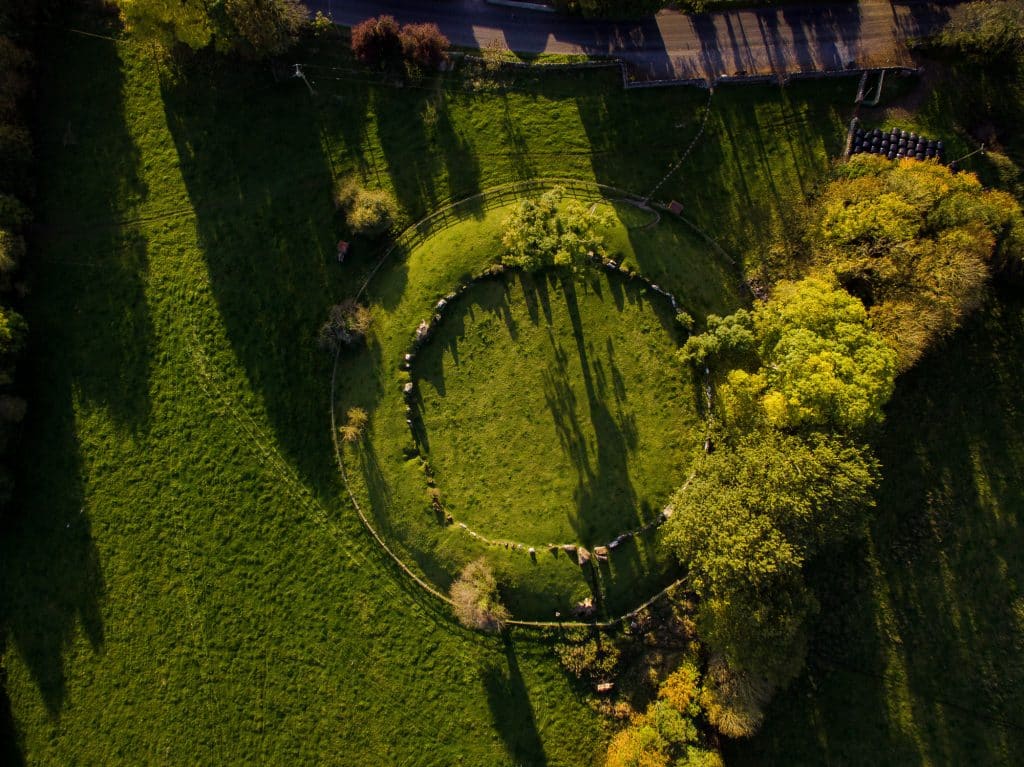
Resting near the waters of Lough Gur in County Limerick, the Grange stone circle is the largest stone circle in Ireland.
This 4,000-year-old stone structure consists of 113 standing stones arranged in a henge, forming a perfect circle, surrounded by a wide earthen bank.
The sacred site can be entered through a distinctly narrow stone-walled gap that channels the sun’s rays at different times of the year to mark both the summer Solstice sunrise as well as the ancient Celtic festival of Samhain, known today as ‘Halloween’.
This dual indication of astronomical events is rare, as most stones usually mark only one lunar or solar event, or sometimes none at all. This theory is, however, still contested by some archaeologists.
1. Newgrange – Europe’s ultimate Neolithic passage tomb
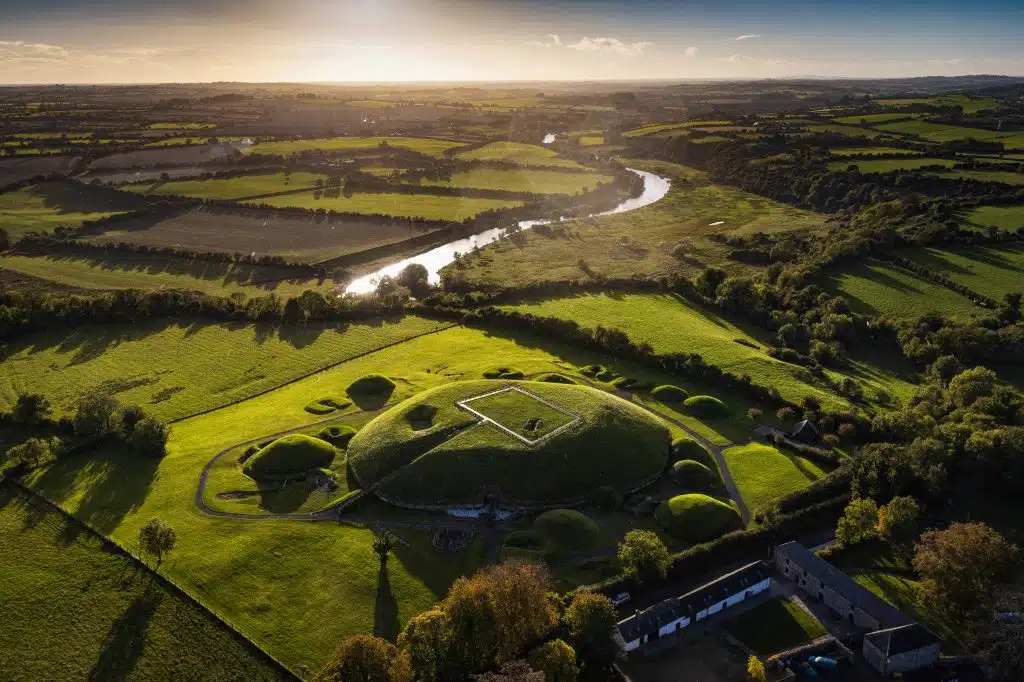
Constructed about 5,200 years ago, the Newgrange massive stone structure is located in the Boyne Valley of Ireland’s Ancient East in County Meath.
Celebrated as Europe’s ultimate Neolithic passage tomb, the structure is encircled by a massive outer ring of 12 of the original 36 standing stones.
Built in two phases, the imposing central tomb was first erected around 3200 BC, then completed with a circle of standing stones during the Bronze Age. It is believed that the circle likely acted as a divine barrier protecting the ancestral tomb.
The ‘roof box’ carved at the entrance is celebrated as a masterpiece of Stone Age engineering. At sunrise on the winter solstice, it allows a slender beam of sunlight to pass through, travelling the full 19 metres of the dark stone tunnel and perfectly lighting up the central tomb.
Scattered throughout Ireland, these must-see prehistoric sites bear witness to the close link between the remarkable engineering of the Neolithic and Bronze Age, combined with astronomical calendars, and the mystical passages that have been the setting for funerals, fire festivals, and other sacred ceremonies.