The word uttered by everyone, not just the Irish mammies.

“Now”. Such a tiny word, yet it packs a punch in Irish speech across the globe. But why, you might ask, do the Irish say it at the end of their sentences? Is it a punctuation mark? A signal to sign off on a task at hand? Or is it a vernacular habit holding its own in a sea of hard-hitting Irish slang?
As a nation, we are all guilty of saying it. The act of bending down to pick up a wet towel from the bathroom floor is followed in quick succession with “now.”
You close the car door, buckle up and turn on the ignition with an audible “now.” You pour a cup of tea, butter your toast and whisper aloud, “now.” In short, it’s an exercise in futility even to try to suppress the ubiquitous “now” from escaping your lips.
Of course, other nations take pride in their own homegrown verbal tics. But unlike “eh” to Canada and “hey” to South Africa, which are needy little words asking something of you, be it an invite to agree or a nudge seeking acknowledgement.
In Ireland, the word “now” is a complete sentence unto itself, requiring zero response or recognition. It has the last word every time.
What is the reason for it – just what does it signify?

Along with punctuating actions, “now” holds strong in a couple of contexts. Often, shocking or thrilling news is introduced with an ominous drumroll of “wait until I tell you now” or “you won’t believe it now, but…”. You can be sure that what’s to follow is a juicy tale.
It can add extra weight in the case of chastisement, as in “ah, would you cop on now” or “why on earth would you do that now?”. Even though the act itself may have taken place days or even weeks ago and has nothing to do with the momentary now.
It represents an extra layer of disgust or disbelief and has the power to send you reeling. That single syllable sums up the dreaded “I’m not mad, just disappointed” rebuke in its brief entirety.
Then of course, there’s the power it has to bend time and make it all but redundant. The “I’ll do that now in a minute” quite literally means that whatever it was that needs doing has already been laid to rest, so forget it, time to move on.
No one is exempt from its usage – it’s part of our vocab

We are a country of now-sayers. Our mums say it, people of authority dressed in uniform say it, the big burly barman handing you your pint of Guinness says it, your toddler niece says it as she wraps her doll up in blankets and puts her to bed.
It’s heard in playgrounds and boardrooms and, no doubt, confession boxes, across the land. It doesn’t discriminate, and it definitely doesn’t play favourites. It’s wholly indifferent to postcodes, accents and the size of your overdraft.
Simply put, the “now” phenomenon should be understood as a grammatical Irish quirk, a catch-all of sorts. It also pairs well with our fondness for throwing the word “there” into sentences willy-nilly, adding neither meaning nor gravitas.
“Would you pass me the milk there?” for example, or “I was just talking about your man there.” Lump both words together, and you befuddle the foreigner: “Are you right there now?”
How did it make its way into the Irish lexicon – and why?

Native Irish speakers who began speaking English through the centuries following the Anglo-Norman invasions developed what became known as Hiberno-English. Traditional Irish (better known as Gaeilge) had no direct translation for simple, clean words like “yes” or “no”.
As a result, speakers would answer by repeating the verb. As in asking “Are you going?” would be answered with “I am.”These grammatical idiosyncrasies serve to remind us of just how much our language has evolved while continuing to mirror original Irish grammar.
Linguists call extra words like “now” and “there” tacked onto the end of a sentence: sentence-final particles. The Irish language relied on words like anois (“now”) to soften a harsh statement or wrap up a thought.
As Hiberno-English became more widespread in Ireland, words like “now” survived as a result of early Irish-English speakers who spoke English but continued to think in Irish Gaelic.
Love it or hate it – it’s here to stay
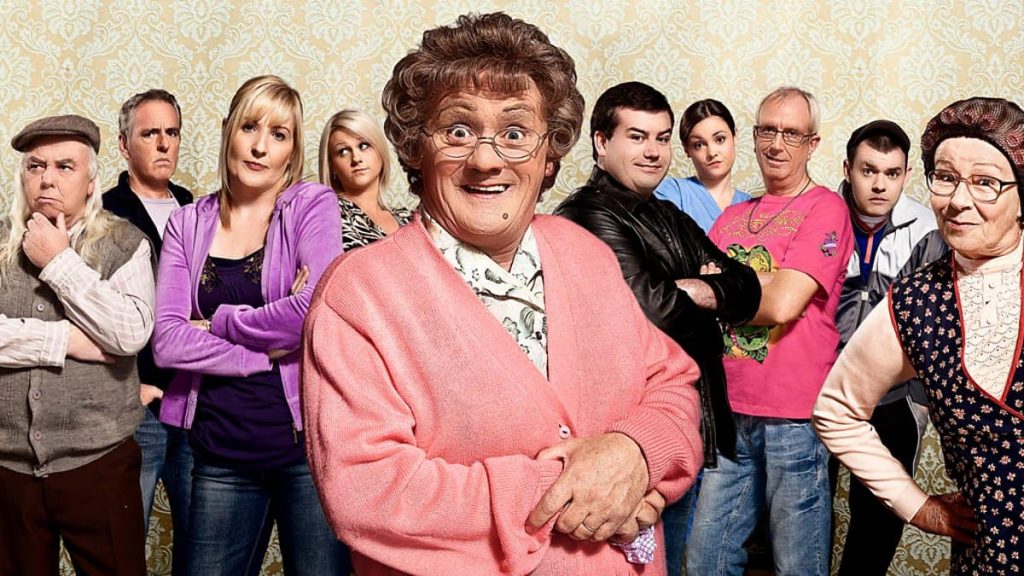
So while many would be forgiven for associating the word “now” with the Irish mammy and her buzzing to and fro, clucking over her brood in the comical style of Agnes Brown, it’s actually not a true depiction, nor does it do it complete justice.
“Now” is arguably one of the most commonly used Irish colloquialisms that can frustrate and endear in equal measure.
It’s a vocal interpretation of internal satisfaction, disappointment, and suspense building. One that is endlessly gratifying to say, like a verbal full stop. And there you have it. Now!