It’s no secret that the Emerald Isle has a complex relationship with one of our closest neighbours, but why? Read on as we explore why Ireland has a complicated relationship with England.

Even if you aren’t familiar with the history of Ireland and England, you wouldn’t have to live in the Emerald Isle for too long to sense the complex relationship the two countries share.
Ireland remains in the common travel area with the UK, and the two countries work closely on a range of international issues. But the fact remains: the relationship between Ireland and England is at times tense, at times cordial, and never simple.
Let’s take a whistle-stop tour into why Ireland has a complicated relationship with England.
History − colonialism and the partition of Ireland
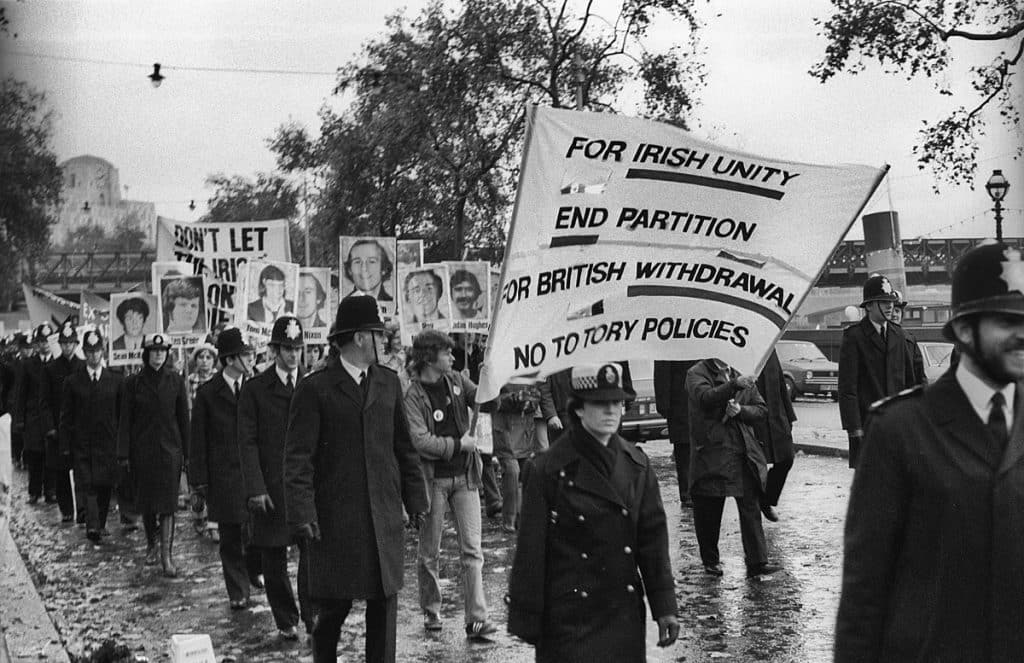
Ireland was Britain’s first colony, with the British crown government carrying out a policy of colonisation known as the Plantations of Ireland from the mid-16th into the early 17th century.
The devastating impact of the Irish Famine further fuelled the tension between England and Ireland. The Famine lasted from 1845 to 1852 and was a grim period of starvation, disease, and death.
During this time, the country lost nearly half its population to famine and emigration. To make matters worse, it is estimated that almost 4,000 vessels carrying food were exported by England from Ireland during the worst year of the Great Hunger, 1847.
Tensions continued to rise during the Irish War of Independence, before the Irish Republic was established in 1949. Throughout this, political and religious tensions between predominantly Roman Catholic Ireland and mainly protestant England were rife.
The scars of this history have no doubt contributed to the complicated relationship Ireland shares with England.
The Troubles − the tension deepens
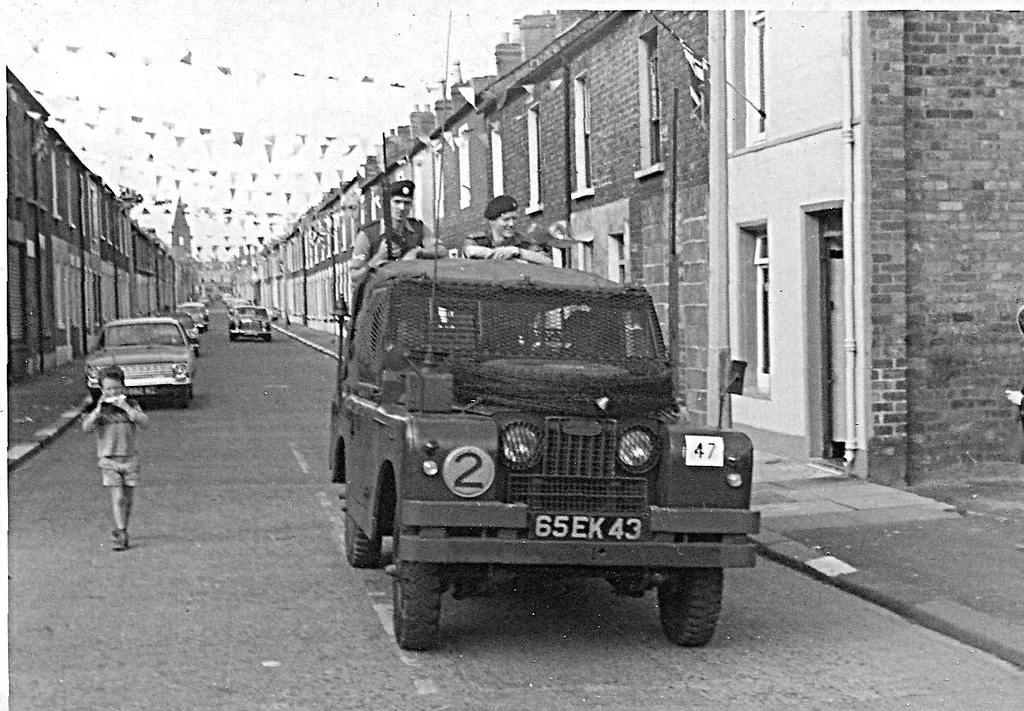
The relationship between Ireland and England became even more strained during the period of violent conflict in Northern Ireland known as the Troubles, starting in the late 1960s until 1998.
During this time, the British Government deployed the British army onto the streets of Northern Ireland, and attitudes toward the army grew to be extremely negative in nationalist communities, particularly after events such as Bloody Sunday.
The British Prime Minister at the time, Margaret Thatcher, was also deeply unpopular with many people in Northern Ireland. Thatcher’s refusal to intervene during the 1981 Irish hunger strike heightened this tension.
This period of history also explains why Ireland has a complicated relationship with England. The impact of the Troubles is still felt today.
The role of emigration − a complex mix of positives and negatives

During the hardships Ireland endured, millions of Irish people ventured to foreign lands in search of a better life. As England was one of the closest geographical options (and therefore the cheapest), many emigrated there.
Unfortunately, many Irish people faced intense discrimination once they arrived, negatively impacting their ability to secure accommodation and employment.
However, many Irish people flourished despite this hardship, and often sent money back home to their families. In fact, the Central Statistics Office has estimated that around €5.7 billion was sent to Ireland by Irish immigrants living in the UK between 1940 and 1970.
This is an example of how the UK positively affected Irish lives, and the complex nature of the relationship the two countries share.
Cultural differences – at times, worlds apart

Cultural differences between Ireland and England also contribute to the complex relationship the countries share.
Ireland is still a predominantly rural country, and most of the urbanisation we see today only began to ramp up in the 1960s.
Many Irish people who grew up in rural areas of Ireland (such as in the Irish-speaking areas of the west) faced a huge culture shock when moving to heavily industrialised and large cities like London.
Many found these cities unfriendly and turned to alcohol to cope with their isolation and homesickness. The Arlington House homeless hostel in Camden was once estimated to hold the largest number of Irish men outside of Ireland.
Today, England and Ireland work in partnership on a range of issues such as trade, investment, and tourism. However, the nuanced history stretching back centuries has inevitably left a mark on Anglo-Irish relations.
With this complex mix of historical, cultural, and political tensions, it is safe to say that the answer to why Ireland has a complicated relationship with England will never be a simple one.
MORE IB4UD ARTICLES ON IRISH HISTORY:
- Top 10 films about Irish history
- Top 10 amazing books about the Irish famine everyone should read
- Top 10 best books on Ireland for history, ranked