From gods to banshee queens, here are the most notable figures from Irish myths and legends.

Ancient Irish mythology stretches back centuries and is forever remembered, having been passed down from generation to generation, sometimes by text and often by word of mouth.
In a land built on traditions and cultural legacy, storytelling reigns supreme and the mythological tales make up much of our heritage here in Ireland.
For those of you looking to get a little insight into Ireland’s mythological past, here’s an A-Z overview of the most notable figures from Irish myths and legends.

Aengus
According to Irish myth, Aengus was a god associated with love, youth, and poetry.
Áine
Áine is seen as the goddess of love, summer, wealth, and sovereignty in Irish ancient myth.
Badb
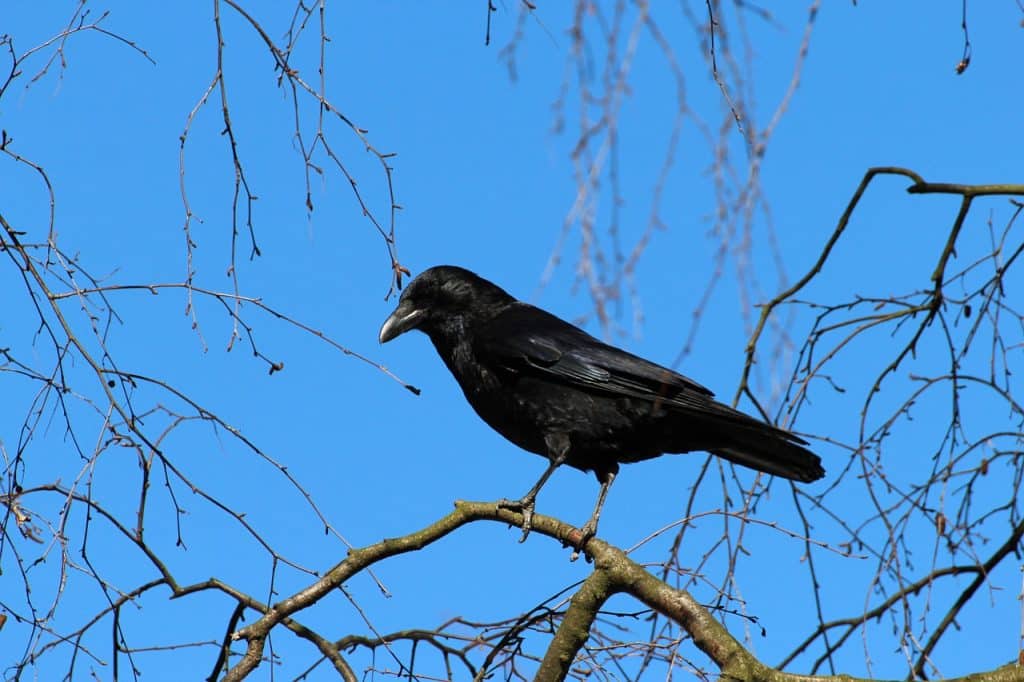
Badb is a goddess of war. It is said she could take the shape of a crow if need be and confuse soldiers.
Banba, Ériu, and Fódla
These three mythological figures are the patron goddesses of Ireland.
Bodb Derg
Bodb Derg, according to Irish myth, is king of the Tuatha Dé Danann – a race of supernatural mythological figures in ancient folklore.
Brigid
Brigid is the daughter of the Dagda – another epic god in Irish myth – and is associated with healing, fertility, poetry, and craft.
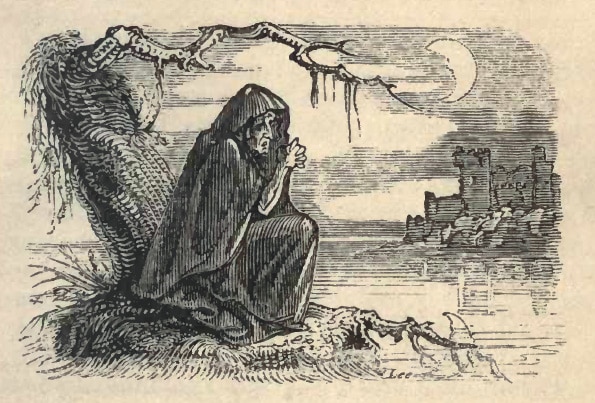
Clíodhna
As told by Irish myth, Clíodhna is the queen of the banshees. Also, according to myth, banshees are female spirits whose haunting wails herald the death of a family member.
Creidhne
Of the Trí Dée Dána (the three gods of craftmanship – see below), Creidhne was the artificer working with bronze, brass, and gold.
The Dagda
The Dagda, aforementioned as the father of Brigid, is the leading god of the mighty Tuatha Dé Danann.

Danu
Danu is the enchanting mother goddess of the supernatural race called the Tuatha Dé Danann in Irish mythology.
Dian Cecht
As told in ancient Irish folklore, Dian Cecht is the god of healing.
Goibniu
Goibniu was the smith (or otherwise known as the metal worker) of the Tuatha Dé Danann.

Étaín
Étaín is the heroine of Tochmarc Étaíne, an ancient Irish mythological text.
Lir
In Irish myth, Lir is the god of the sea.
Luchtaine
According to legend, the carpenter of the Tuatha Dé Danann was Luchtaine.

Lugh
Lugh, according to ancient texts, was a legendary hero and, more impressively, the High King of Ireland.
Manannán mac Lir
Manannán mac Lir is the son of Lir. Like his father, he too is a god of the sea.
Macha
Macha is a goddess who is associated with war, battle, horses, and sovereignty in Irish mythology.

The Morrígan
According to folklore, The Morrígan is a goddess of battle as well as fertility.
Nuada Airgetlám
Nuada Airgetlám is remembered as being the first king of the Tuatha Dé Danann.
Ogma
As told in Irish mythology, Ogma is a warrior-poet who has been cited as the inventor of the Ogham alphabet, an early Irish language.
Trí Dée Dána
Trí Dée Dána refers to the three gods of crafting in ancient folklore. The three gods included Creidhne, Goibniu, and Luchtaine.
Other mythological figures and races
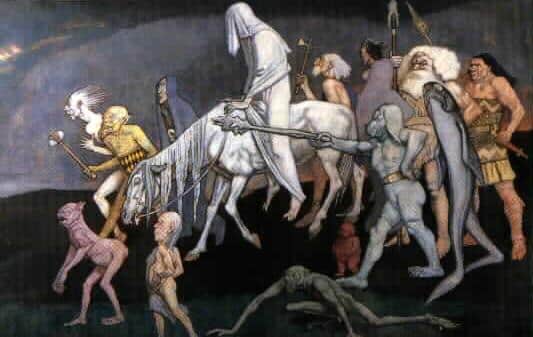
There are many other lesser-known figures from Irish myths and legends, including various other supernatural races that would have come after the Tuatha Dé Danann.
Other races include Fir Bolg (another group of settlers to come to Ireland) and the Fomorians (generally depicted as a hostile, dangerous sea-dwelling supernatural race).
In Irish mythology, the Milesians are considered to be the last race to settle on the island of Ireland; they represent the Irish people. According to folklore, on arrival in Ireland, they challenge the Tuatha Dé Danann who are said to represent the Pagan Gods of Ireland.
Cycles in Irish mythology

More so – and again thus proving the density of ancient Irish folklore – figures from the mythological cycle are just one of four different “cycles” in Irish mythology. There is also the Ulster Cycle, the Fenian Cycle, and the Historical Cycle.
While the Mythological Cycle was the first and earliest traces of ancient folklore, The Ulster Cycle was the second. This Cycle dates from first century AD and focuses more so on wars and battles, high kings, and heroines.
The Fenian Cycle spawned in the third century AD and its tales are rooted in the Munster and Leinster regions of Ireland. Legends from this era generally tell of adventurers and primitive life on the island.
Between 200 AD to 475AD the Historical Cycle was written. At this time Ireland was shifting from Paganism to Christianity; thus, many of the stories are rooted in similar themes.