Irish wakes allow people to celebrate the life of a loved one, but they also help them cope with grief, according to a new study.

A new study carried out at Ulster University has suggested that Irish wakes help people cope with grief.
The study shows that Irish people are less prone to prolonged grief disorder than those in the UK and suggests that the wake tradition is key to helping them cope with the loss of a loved one.
Irish wakes – a celebration of life
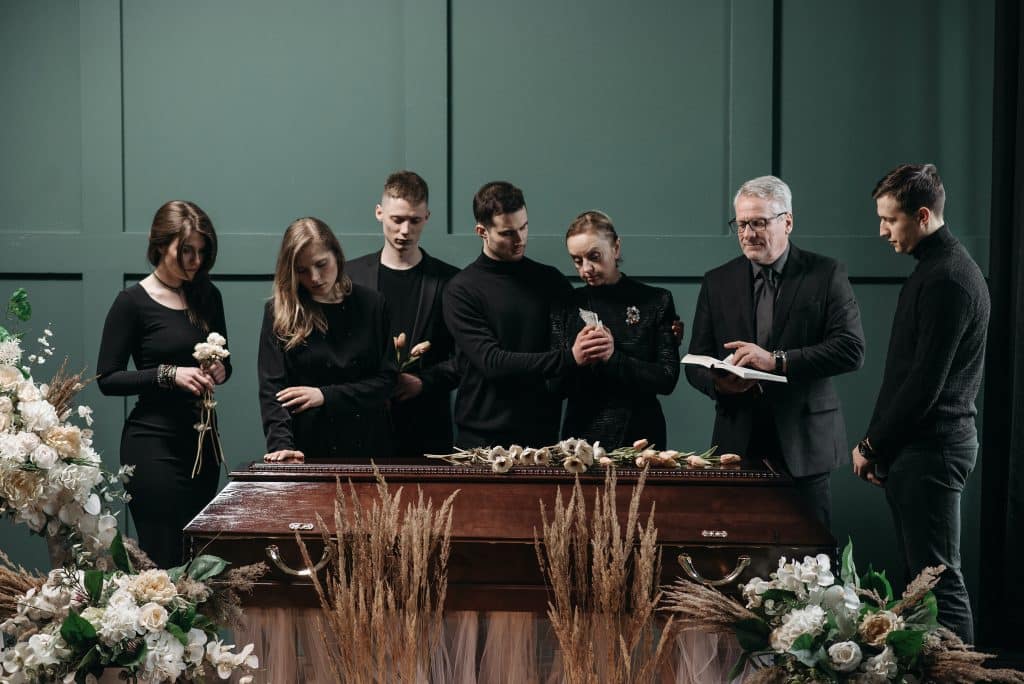
In the days leading up to a funeral, Irish people come together to celebrate the life of the deceased and comfort those grieving loss. This is known as an Irish wake.
Key components of the Irish wake include drinking alcohol and singing songs – it is not necessarily a sombre occasion.
While wakes vary based on local and familial traditions, they are commonplace throughout the country and the diaspora. They are very much a communal event, involving not just the family but also friends and neighbours.
Prolonged grief disorder – persistent longing or yearning

While grief is a natural response to the death of a loved one, the feeling tends to diminish as time passes. For some, however, the feeling of acute grief persists, leading to a condition known as prolonged grief disorder (PGD) that affects everyday life.
The Ulster University study, published in the Journal of Traumatic Stress, identifies two core symptoms of PGD: “persistent and pervasive longing or yearning for the deceased and a preoccupation with the deceased”.
Other symptoms, outlined by the American Psychology Association, include identity disruption, intense emotional pain, difficulty with reintegration, and heightened feelings of loneliness and isolation.
Benefits of an Irish wake – how an Irish wake helps with grief

The authors of the study – Philip Hyland, Enya Redican, Thanos Karatzias, and Mark Shevlin – set out to test the reliability and validity of the International Grief Questionnaire (IGQ), a brief, self-screening measure for PGD.
They gave the IGQ to two samples of people: one set from Ireland, another from the UK. The study found that 10.9% of grieving people in Ireland met the criteria for PGD compared to 15.3% of people in the UK.
The authors “speculate that cultural differences with regard to death may be an explanatory factor” for this difference.
They continue, “For example, in Ireland, it is customary to hold a wake” before the funeral, whereas in the UK, similar practices “generally take place after the funeral”.
The study goes on to posit that there is a “greater sense of community within the Irish bereavement culture” wherein “funerals are typically regarded as communal events”. In the UK, on the other hand, funerals are “often regarded as being private”.