Irish history is full of incredible people who shaped it and our country.

However, not everyone was actually born in Ireland. Yet, some of them gave their lives for Ireland.
We’re looking at ten of those legendary figures – many of them will surprise you.
10. William Bedell – supporting the Irish language

You might not have heard his name before, but William Bedell was responsible for commissioning the translation of the Old Testament into Irish. The actual translations were done by Murtagh King from Co. Offaly.
Bedell only appointed Irish speakers to the parishes. Where was he born, you ask? Bedell was an Englishman from Essex. That makes his commitment to the Irish language even more impressive.
9. Margaret Skinnider – from maths teacher to sniper

Suffragette. Feminist. Revolutionary. Sniper. These are just some of the words to describe Margaret Skinnider. She smuggled detonators and equipment for bombs – to prepare for the Easter Rising 1916.
Skinnider was born in Scotland to Irish parents. While spending time in Ireland, she met Constance Markievicz, who showed her what Dublin was like at the time. Skinnider was seriously wounded in action, but recovered later on.
8. Tom Clarke – 1916

Tom Clarke died on 3 May 1916. You probably know where his story ended – but Ireland’s story continued. Clarke was at the General Post Office during Easter Week in 1916. He was one of the commanders, although he didn’t hold a formal military rank.
After the surrender on 29 April, he was arrested and brought to Kilmainham Gaol. He was then executed on 3 May, just like Pearse and MacDonagh. Tom Clarke died for Ireland, but he was born in England.
7. Molly Childers – sailing gun-smuggler

Childers might be a surname familiar to you in Irish politics and history – it was the name of the fourth president of Ireland. His mother, Mary Alden Childers, better known as Molly Childers, was originally from Boston.
In 1914, she was involved in the Howth Gun-Running, using her family’s yacht to smuggle 1,500 rifles to Ireland for the Irish Volunteers. Upon arrival, however, a riot broke out.
6. James Larkin – a voice for workers

Walking around O’Connell Street in Dublin, you have certainly seen James “Jim” Larkin, a.k.a. Big Jim. His statue is the one with his hands up in the air right by the Spire. He was one of the founders of the Irish Labour Party.
However, he is best known for organising a strike in 1913 that resulted in the Dublin lock-out, a dispute over salaries and working conditions. He is buried in Glasnevin Cemetery in Dublin, but he was born in Liverpool.
5. Maud Gonne – for Irish independence
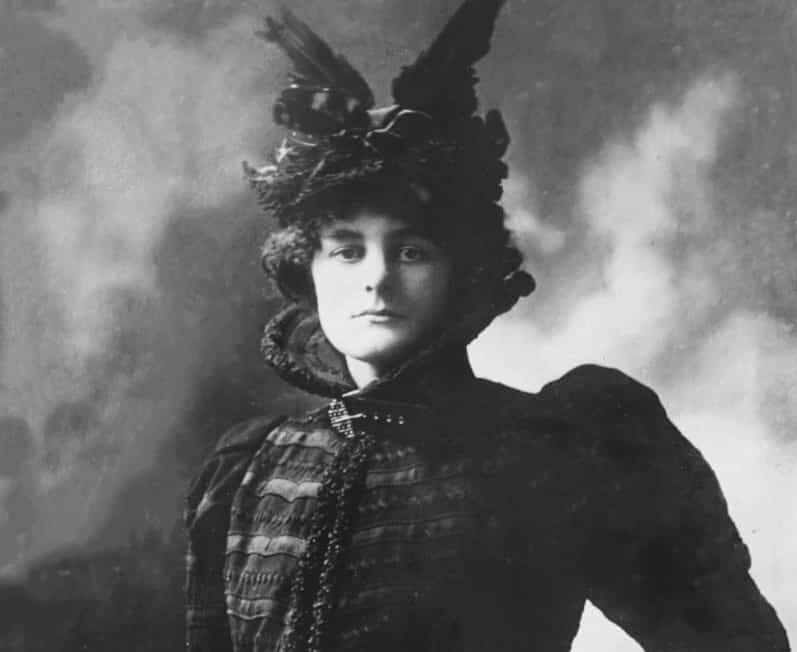
The long-time love interest of W. B. Yeats, Maud Gonne rejected his marriage proposal several times, and they’re nonetheless one of the top Irish love stories. That’s not why she entered Irish history, though.
Maud, who was originally from Surrey in England, was a revolutionary, feminist, and humanitarian. She raised funds for famine relief. Gonne opposed the Anglo-Irish Treaty fiercely, and her anti-Treaty activities resulted in imprisonment later on.
4. Countess Constance Markievicz – a heroine

Pretty much a hero of Irish history, she was the first woman to be elected to the Parliament in the UK – however, she never took her seat in the House of Commons. She was then elected to the 1st Dáil while imprisoned and re-elected to the 2nd Dáil.
The Countess was born in London, but took part in the Easter Rising. She was sentenced to death, but reportedly never executed because she was a woman. That also meant she could continue her fight for Ireland.
3. James Connolly – died for Ireland
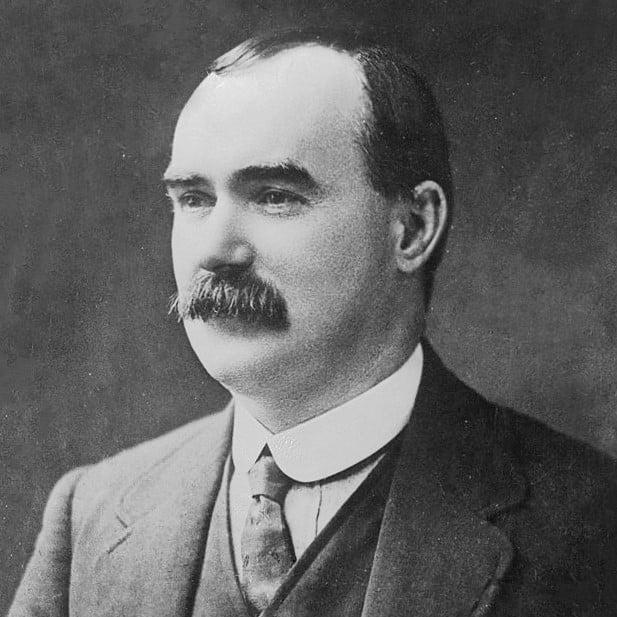
Have you ever taken the train from Dublin’s Connolly Station? It was named after James Connolly. Born in Edinburgh, he was a key figure in the Easter Rising and was executed for that. Before he died, he said: “Wasn’t it a full life, Lily, and isn’t this a good end?”
His impact on Ireland was profound. He founded the Irish Citizen Army, among the signatories of the 1916 Proclamation, and he was the Commandant-General who directed the rebel forces from the General Post Office during the Easter Rising.
2. Éamon de Valera – founder of Fianna Fáil

Born in New York City, de Valera is known as one of Ireland’s Taoiseach (Prime Minister) and Presidents. However, his part in Irish history started even before that. de Valera took part in the 1916 Easter Rising.
Although imprisoned for his participation in 1916, he wasn’t executed. Among the reasons might have been his American citizenship. He opposed the Anglo-Irish Treaty and later founded the party Fianna Fáil in 1926.
1. St. Patrick – celebrated every year
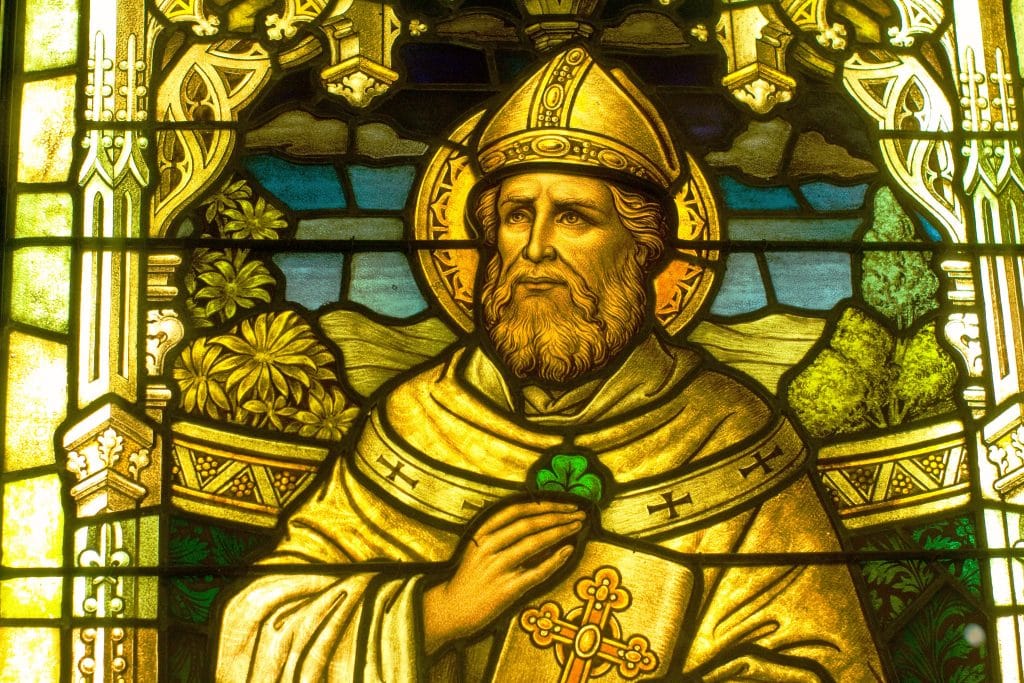
Ireland’s patron saint was not born in Ireland. Yes, it’s true. He was born in Britain, and at 16, he was kidnapped and sold into slavery. He spent several years herding sheep in the West of Ireland, and then he turned to his faith because of the difficult times.
St. Patrick used the shamrock to explain the Holy Trinity to the locals. One of the things he is famous for: Driving the snakes out of Ireland. While that might be more legend than fact, we’ll take it.
These ten people all shaped Ireland with their contributions, even if they were born somewhere else. Which of these Irish historical figures surprised you the most?