Some Irish myths are still very much alive today.

Exploring Irish mythology is one way of understanding Irish cultural and historical heritage.
Some of these myths, which have inspired famous writers such as J.R.R. Tolkien and C.S. Lewis, still play an important role in the lives of the Irish, leading sometimes to enduring superstitions.
Fairy forts – you should never disturb them

In Irish folklore, fairy forts are considered sacred places. Scattered all around Ireland, these ringfort remains, often covered in hawthorn trees, are believed to be the home of fairies and should not be messed with.
To this day, disturbing a fairy fort and damaging its vegetation is believed to bring bad luck and misfortune to the troublemaker.
As this superstition persists, Danny Healy Rae, a Member of the Irish Parliament, attributed the damage caused to a local road in 2017 to the disturbance of one of these forts, attesting to the importance and seriousness attached to Irish myths.
The Teachta Dála commented: “There are numerous fairy forts in that area….I know that they are linked. Anyone who tampered with them back over the years paid a high price and had bad luck.”
Red Robin – a sign of remembrance from a loved one

The Red robins, known as ‘Spideog’ in Irish, have been regarded in Irish folklore as intermediaries between the physical and spiritual worlds, capable of conveying messages from the dead to the living.
Today, spotting a red robin is believed to be a sign that a loved one who has passed is visiting or sending comfort. These tiny red-breasted birds are cherished symbols of remembrance and hope.
The Banshee’s Wail – death around the corner if you hear them shriek

The Banshee, often depicted as an old woman, is a well-known figure in Irish folklore.
Her cry, which could be compared to a mixture of shrill sobs and the howling of the wind, is said to herald the imminent death of a loved one.
This myth, which remains firmly rooted in the minds of the Irish, is often depicted in Irish literature and, more recently, in Irish cinema.
In The Banshees of Inisherin, directed by Martin McDonagh, the banshee takes the form of an elderly woman from the village, feared by the community as the foreteller of the deaths and misfortune of many characters in the movie.
Saint Patrick’s holy miracle – the one who drove snakes out of Ireland
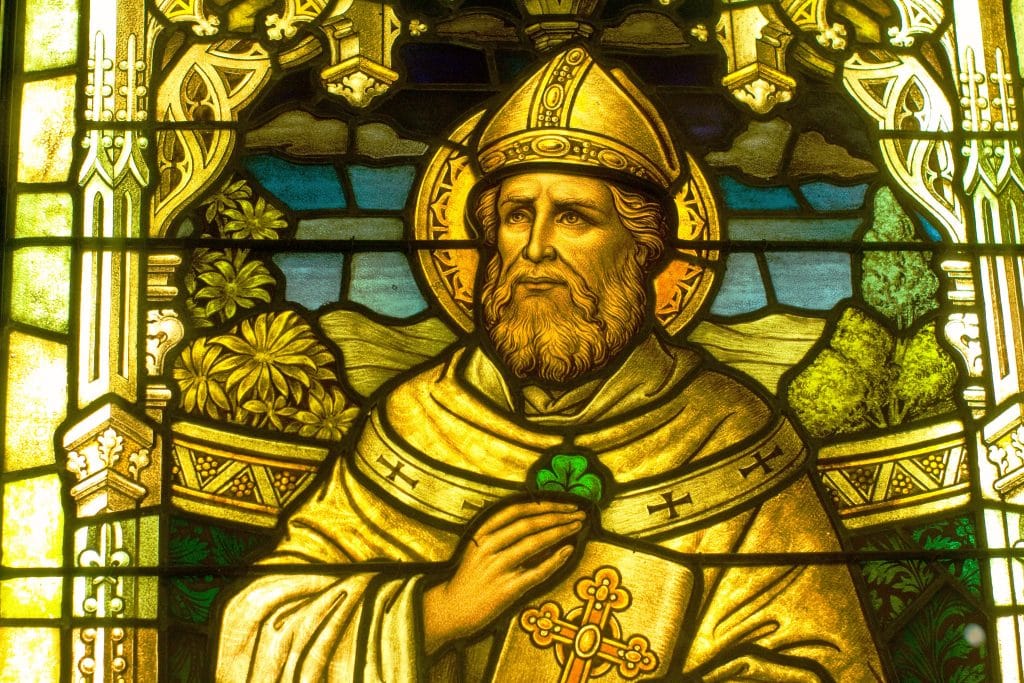
Another myth that has left its mark on Irish history is the one according to which Saint Patrick drove the snakes out of Ireland.
According to legend, after snakes attacked him during a 40-day fast on Croagh Patrick, a place of pilgrimage to this day, Saint Patrick used his staff to cast them into the sea in a final act of divine protection.
This tale is often preferred by the locals as it conveniently beats the scientifically accurate (but much duller) explanation of why Ireland has no native snakes.
As everybody knows, although myths do not reflect reality as we experience it, they always contain a grain of truth that explains why they persist in the credence of some people.
Whether taken literally or simply respected as tradition, these Irish myths continue to shape how people engage with the country’s heritage.