The dream of a quaint Irish cottage is more accessible than most people think. Read on to discover the grants available for those with an interest in Irish historic properties.

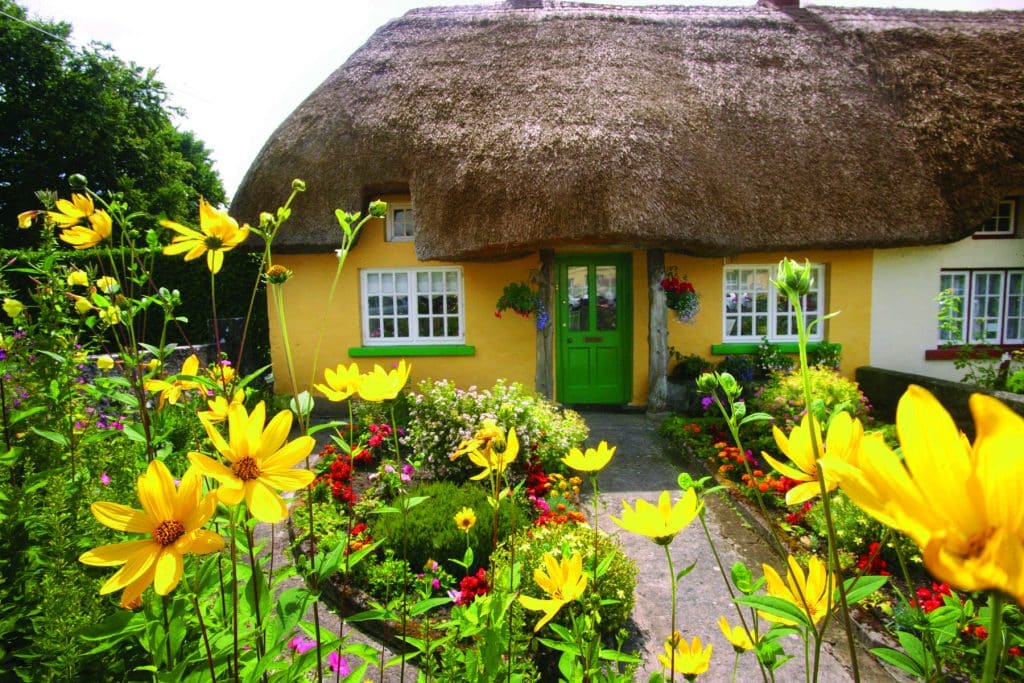
There is a real sense of romance surrounding Irish cottages, with their thatched roofs and beautiful flowers, maybe a plant pot of shamrocks on the windowsill. Given the Irish property market, many of these traditional types of properties are now out of reach.
However, buying an abandoned Irish cottage and fixing it up offers many benefits. You can avail of various grants while also keeping a piece of Irish history alive.
Cash buyers or specialised loans – money in the bank

For the most part, these cottages will not qualify for a traditional mortgage. Therefore, you will need to have cash in hand for this purchase. The good news is that due to the derelict nature of these properties, they are often attractively priced.
There are loans available through the councils, as mentioned, for vacant property, the Local Authority Purchase and Renovation Loan (LAPR).
However, the strict qualifications for this loan, including first-time buyers or those who no longer hold a stake in a property, mean that buyers may not qualify.
Credit unions offer a Vacant Property Loan for the buyers who are unable to acquire this loan.
Croí Cónaithe Vacant Property Grant – for vacant homes
The grants available to prospective buyers include the Vacant Property Grant, up to €50,000, applicable if the property has been empty for two years or more and was built before 2008. Additionally, if the site is derelict, there is a top-up of €20,000.
Crucially, these grants are paid out after the work has been done. Many people do not have this type of pot in advance. Therefore, banks and county councils often offer a loan to cover the works, which the grant will pay off later.
Finding your dream Irish cottage – the search begins

The number one site in the Republic of Ireland is Daft. However, many county councils keep a list of vacant or derelict properties, or offer a matching service between buyers and sellers. One alternative is to drive or walk around your target area and identify houses that look abandoned.
Then find out who owns the house and write to them with an offer. It is also possible to find these houses on dedicated auction sites.
Utilities – bringing your new cottage into the present day

Many of these houses will not have modern utility setups and this alone can be a hidden cost.
Modern sewage and wastewater systems, wiring for electricity, and drilling a well if there is no mains water supply, can be very expensive. Modernising an old property can easily eclipse the price of a modern home.
Historic homes – own a piece of Irish history

Remember that historic homes function completely differently to modern drywall and timber. These houses breathe and require care. The walls are made of lime mortar and stone. They are supposed to breathe.
If a modern contractor makes the error of suffocating the walls using Portland cement, this will trap moisture in the walls and lead to dry rot. Ensure that any worker hired is certified by the Charter of Surveyors Ireland and specialises in historic buildings.
There are also rules in place regarding what you can change about the façade or the structure. If the property was built before 1963, you don’t need special permission for interior work or like-for-like structural repairs.
However, if you want to add an extension you will need permission from the county council.
Historic home grants – keeping history alive

Councils in Ireland offer a few schemes for owners of historic properties. The Built Heritage Investment Scheme (BHIS) offers property owners from €2,500-50,000 to protect and repair specific architectural assets.
There is also the Historic Structures Fund, which offers anywhere from €50,000-200,000 for the upkeep of historic properties.
Northern Ireland – over the border

Although buying an abandoned cottage here looks cheap on paper, there are no grants or schemes provided for people interested in purchasing these houses. Therefore, buying in Northern Ireland is recommended only for cash buyers and builders.
However, this is one way to acquire the ability to knock down the extant property and build a new, modern house, bypassing Northern Ireland’s strict property laws.
Buying an abandoned cottage in Ireland is a good way to save on costs and contribute to the long-term preservation of Irish history. The grants and help available make this type of property purchase one of the best deals in Ireland.