
Spoiled for choice, if you can stomach them.

Ireland’s culinary history is one of necessity. Flavour was not the top priority for most people as much as nutrition, which meant a lot of meals focused on the main staples of root vegetables, water, and whatever meat you could find. Most Irish food had one or all of these elements.
Those days are long behind us now, with Ireland being known as a cultural hub for foodies across the world. The recognised quality of our national produce shines through. What’s seen as a cultural experience by visitors is homely, delicious or, like our picks today, completely hated.
The reasons for this hate are sometimes deep generational biases, lack of interest or the fact that they don’t taste the best. Here are five Irish foods that are adored by some but loathed by others.
5. Black and White Pudding – to breakfast roll or to not breakfast roll?
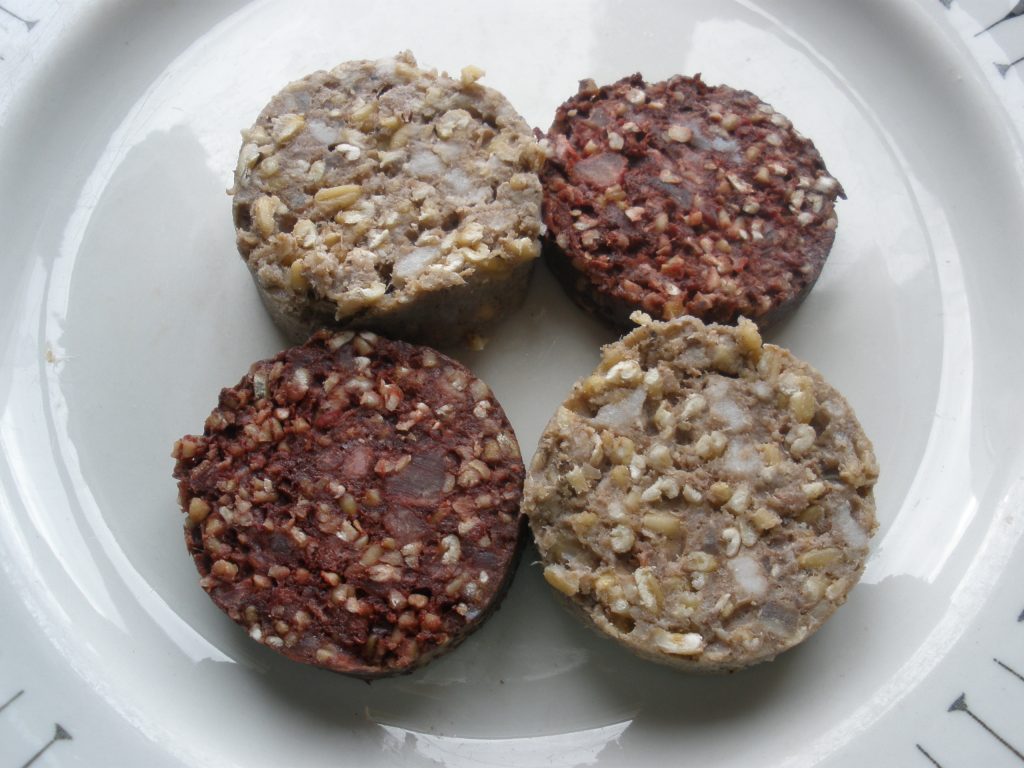
A common deli counter character to start. Black and white pudding make up one of the key elements of the great Full Irish Breakfast and come as a pair most of the time you’re fiending for a breakfast roll.
Black pudding is the more recognisable of the two, a national dish in England and Scotland. In Ireland, it’s usually with its white variety. Both puddings use pork innards (offal), with black pudding adding pig’s blood as its main binder.
This, combined with the fact that both puddings can have a crumbly texture, can be a major turn-off for some people. If given the chance, though, both black and white pudding can make a great addition to any breakfast, lunch or brunch menu.
4. Barmbrack – one true ring for Halloween

If you’re a person who loves autumn and spooky season, then this bread may be for you. Barmbrack, or bairín breac in Irish, is essentially a round fruit loaf usually eaten with evening tea on Halloween, served fresh with just a spread of butter.
A tradition that goes back centuries, barmbrack usually has a ring baked inside the loaf which, if discovered, means good luck for the person who finds it.
The ring itself has been seen as a choking hazard, especially for little kids. This is in part the reason why the bread has fallen out of favour over the years.
This is a shame, as Barmbrack is a tasty treat. The sweet fruit filling, along with its dark, malty bread, is the perfect companion to a cup of tea on a cold October night. Better than any candy.
3. Cold salad – coleslaw or potato salad?

If you were naming a list of countries famous for salads, Ireland would probably be dead last. It’s not a food we’re best known for, as our produce is stodgier and filling.
Enter the cold salad, a mixture of butcher’s meat, sandwich fillings and maybe a little tomato and lettuce if you’re lucky. Usually eaten during the summer months, what may look more suitable between two slices of bread is served on a plate with a knife and fork.
This can be problematic for some, as it’s just a cold, floppy piece of meat and condiments masquerading under the guise of a bright bowl of mixed vegetables covered in a nice vinaigrette.
2. Colcannon – simple, yet direct

The potato has always been an important element of the Irish food diet. It’s reliable and nutritious, and when mixed with another valuable crop, you get an Irish classic. Colcannon is usually cabbage mixed with mashed potato, butter and a little cream.
The dish’s contrasting flavours are a contributing factor to its hate. Cabbage can sometimes be bitter and clash with the richness of the mash. The textural crunch of the leafy green can be off-putting, and if the cabbage is wilted, it can be mushy.
Colcannon is a culinary experience with a long heritage. So, if you can stand the thought of cabbage mixed with potato, you’re in for a treat.
1. Coddle – the real Irish stew?

It’s and unwritten rule in Irish society to love a good bowl of stew. With its nutritional benefits from the stock, protein and whatever vegetables are used, there’s another debate to be had: what type of stew is best?
Coddle is a native stew that can be found on many a pub menu, such as The Grave Diggers pub in Dublin’s Glasnevin. Known as a “White Stew” as it’s also known because of its colour. Coddles distinct white broth comes from the addition of pearl barley.
The barley thickens the stock, which gives a feel more akin to porridge rather than your traditional stew broth. This is where the conversations start to begin on people’s preference. Dublin’s stringent defence of the dish has also led to accusations of snobbery.
Whilst this controversy rages, the stew itself remains a mainstay of Irish food and deserves its spot as a lovable Irish Icon.