These are some of Ireland’s creepiest places, and why locals avoid them after dark.

Ireland is home to several haunted and supposedly cursed sites that local communities approach with great caution. They don’t stay away from these places for fear of crime or dangerous wild animals, but because of a deep respect for historical warnings passed down through generations.
Most of these places are often associated with witchcraft, tragic violence, or some unexplained phenomena. If you ever find yourself exploring the Irish countryside after dark, here are the five cursed places in Ireland locals refuse to step foot in after dark.
5. Loftus Hall, Co. Wexford – the devil played cards here

Situated on the Hook Peninsula, Loftus Hall is a large mansion house with a haunting history. The Redmond family built the original hall in 1350, and it was known as Redmond Hall until the 1650s when the Loftus Family acquired it.
According to local legend, the hall’s bizarre story began in the 1700s. The Tottenham family, who were living here at the time, invited a stranger on one stormy night.
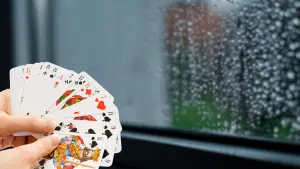
Anne Tottenham, a young daughter of the family, became charmed by the stranger. In the evening, while playing a game of cards, the young daughter bent down under the table to retrieve a dropped card.
However, she was horrified to discover the stranger had a cloven hoof instead of a foot! The stranger reportedly vanished through the roof in a ball of flames.
It is said the young lady never recovered from the ordeal. She remained locked in one of the rooms until her death.
Loftus Hall has since carried a reputation that has terrified the locals for generations. In 2012, the hall was opened to the public, and there have been reports from visitors who claim to have some weird experiences while inside.
Address: Loftus Hall, Loftushall, Fethard, Co. Wexford, Ireland.
4. Leap Castle, Co. Offaly – a spine-chilling castle with a dark history
Widely regarded as one of the scariest haunted castles in the world, Leap Castle is said to be home to the ghosts of people who died in its dungeon.
The O’Bannon clan built this castle in the early 1500s, and it was later controlled by the violent O’Carroll family. It’s said that a priest was stabbed to death by his own brother while celebrating mass. The room where this incident occurred is still known as the Bloody Chapel.
There are also numerous stories of strange happenings in the castle, including doors slamming, pictures disappearing from the walls, and footsteps in the night.
Locals believe that a foul-smelling ghost with sunken eyes, known as “The Elemental,” often appears in the castle at night. The castle’s gruesome history involving tragic deaths, horrific tortures, and haunting experiences keeps most locals away.
Address: The Leap, Roscrea, Co. Offaly, E53 VK51, Ireland.
3. The Hellfire Club, Co. Dublin – satanic rituals on the mountain peak
Perched high on Montpelier Hill in County Dublin, this 18th-century hunting lodge has an incredibly dark history that scares off the locals, especially at night. The lodge was initially built by William Conolly in 1725.
After William died, it was sold and became the meeting place for the Hellfire Club. This was a group of high-society aristocrats and elites who wanted to escape the city centre and indulge in all manner of nefarious activities.
The members of the club are said to have engaged in sex, heavy drinking, and dark rituals. There were speculations that they were involved in devil-worshipping and satanism.
It’s said they would reserve a place for the devil during their meetings in the hope that he would attend.
While the walking trails leading up to the Hellfire Club are popular with hikers and dog walkers during the day, the area becomes entirely deserted as the sun goes down.
Address: Mountpelier, Co. Dublin, Ireland.
2. The Abbey of the Black Hag, Co. Limerick – a medieval convent turned dark

The Abbey of the Black Hag is one of the creepiest places in Ireland you should never go after dark. Historically known as St. Katherine’s Abbey, this 13th-century convent is home to chilling tales of witchcraft.
What began as a quiet place of prayer and reflection turned into a dark site of occult activities.
According to local folktales, the convent’s final abbess refused to leave after the pope ordered its closure in 1432.
She is said to have remained behind, where she began practising witchcraft and the dark arts. Locals believe she may have eventually imposed a curse on the land and the surrounding village population.
Her dark spiritual practices earned her the name “Black Hag,” with the local community maintaining that her spirit never left the ruins even after her death.
There are also tales of the Countess of Desmond, who was accidentally buried alive beneath the chapel’s main altar. Her ghost is believed to roam the ruins to this day.
Neighbours warn that visiting the abbey after sunset can bring you misfortune and bad luck.
Address: Oldabbey, Greenville, Shanagolden, County Limerick, Ireland.
1. Leamaneh Castle, Co. Clare – haunted by the notorious Red Mary

Situated on the edge of the Burren, the Leamaneh Castle ruins look undeniably spectacular. This castle has a history dominated by Máire Rua O’Brien, also known as “Red Mary.” She is famous for her legendary temper and fiery hair.
Red Mary ruled over her vast estate and household with an iron fist in the 17th century. She is said to have been extremely cruel, with locals claiming that she tortured disobedient servants to death.
They say she would hang them by their hair from the high castle windows until they died. Legend has it that due to the ruthless treatment of her workers, angry locals captured her and sealed her inside a hollow tree where they left her to starve.
Her ghost is said to continue haunting the castle’s ruins. Driving past the castle at night is a frightening experience as the local community believes her angry and restless spirit still watches over her ancestral lands.
Address: Lemenagh Castle, Leamaneh North, Co. Clare, Ireland