A border that runs through the kitchen is hard to patrol or control. This timeline of Ireland’s partition traces a century of rebellion, violence, and uneasy peace from 1921 treaty to today’s open frontier.
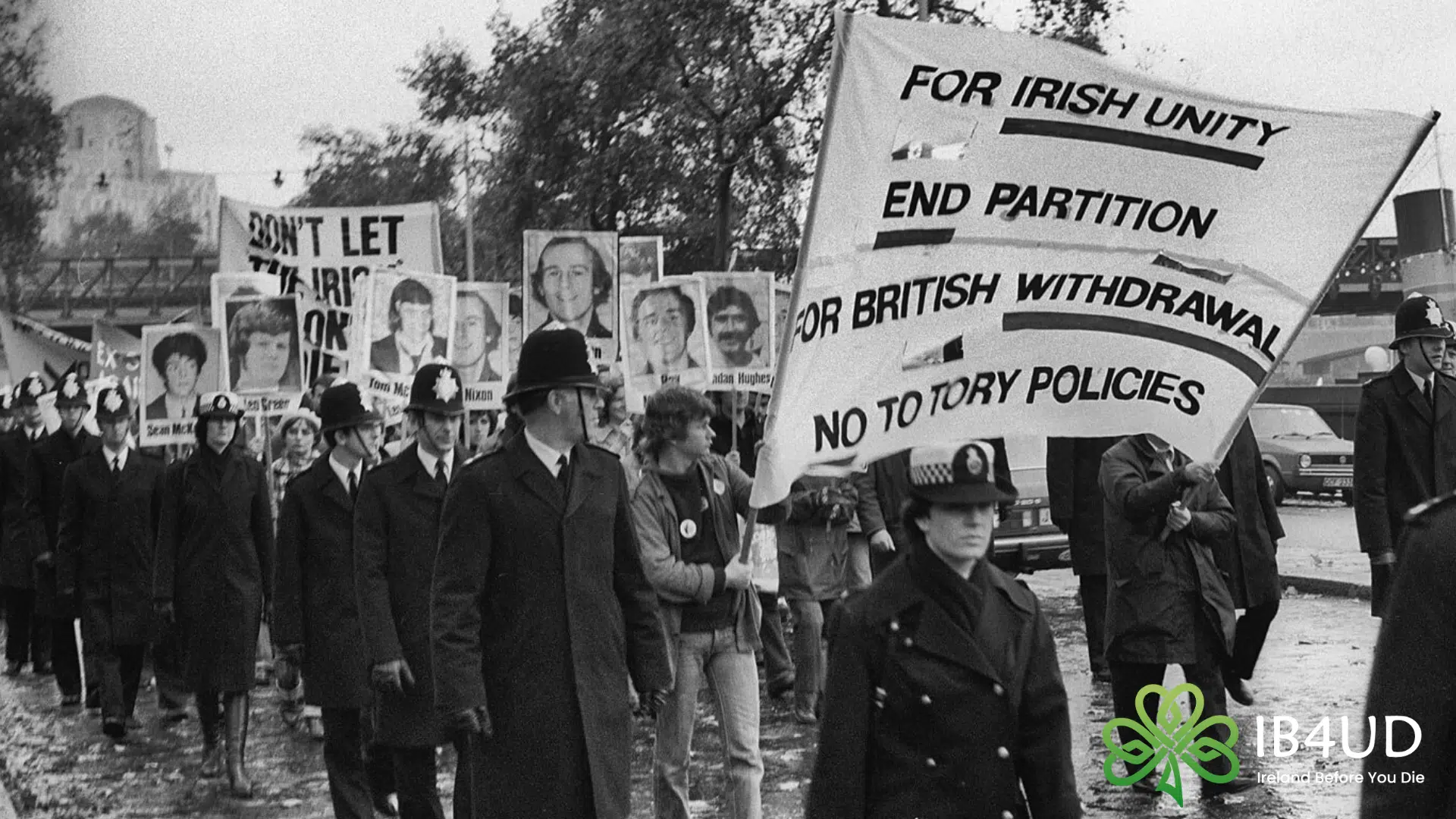
The partition of Ireland has shaped its modern history and continues to inform daily life on the island.
Many people lost their lives fighting on both sides of the divide. Understanding Partition is an important part of understanding today’s Ireland.
1910s/20s – dawn of rebellion, shadow of division

1916: Easter Rising origins
The Irish Republic was a revolutionary state that declared its independence from the United Kingdom. Its origins were in the Easter Rising of 1916, and claimed jurisdiction over the entire island of Ireland.
Although this initial attempt ended with the execution of the rebels, its survivors reshaped Sinn Féin, turning it into a vehicle for republican aims amid growing anti-British feeling. This is the story of Ireland’s partition.
1918–1921: Sinn Féin, Dáil, and War of Independence
Sinn Féin won a majority of seats in the constituencies of Ireland in the 1918 election. Instead of taking their seats in Parliament, the Dáil – or Irish Parliament – was then created as an underground assembly.
The Republic had its own police force and court system, giving rise to the Irish Republican Army, which fought against British forces in the War of Independence, a brutal guerrilla conflict of ambushes, reprisals, and burned towns. The war culminated in the Anglo-Irish Treaty of 1921.
1920–1922: Ireland’s partition violence and states emerge
Ireland had a Catholic majority that wanted self-determination and independence. Ulster unionists did not want to be ruled by an Irish government, which led to the Home Rule Crisis.
Ireland’s partition whilst still within the United Kingdom happened in May 1921, when the Government of Ireland Act 1920 came into effect, after which it was separated into Northern and Southern Ireland.
The original goal of this separation was to keep Ireland as a whole within the United Kingdom. From 1920-22, there was a wave of violence both for and against, in what would become Northern Ireland.
Catholics felt ‘stranded’ on the other side of the border, in a ‘pro-British, Protestant state’.
However, Southern Ireland was not a success for the UK, as its rule was not recognised by most of its citizens, and would become the Irish Free State in 1922, due to the Anglo-Irish Treaty.
This triggered the Irish Civil War (1922–23) as anti-Treaty IRA forces rejected Ireland’s partition and dominion status.
1930s – constitution’s quiet claim
1932–1937: Treaty foes take power
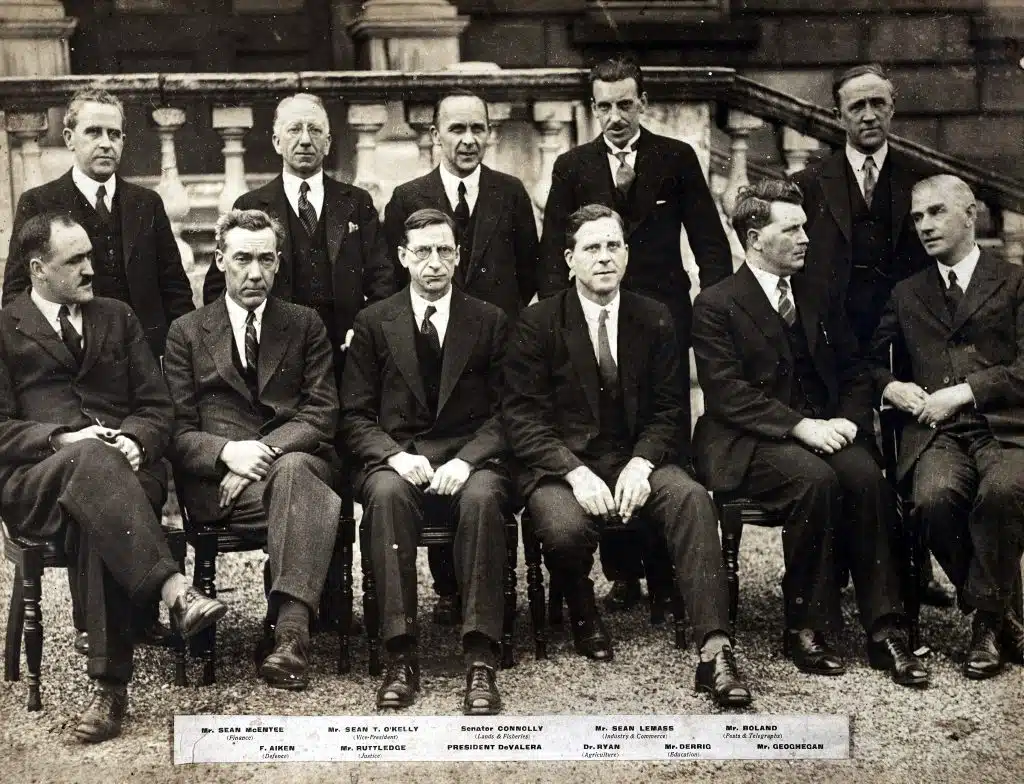
Various groups opposed this treaty, including Fianna Fáil, who came to power in the 1932 February election, and whose 1937 constitution claimed authority over the entire island.
This symbolically rejected Ireland’s partition whilst building a stable southern state amid economic hardship and cultural revival.
1940s/50s – whispers of unity in wartime

1940–1942: Churchill-de Valera exchanges
In 1940, after the Fall of France, an offer was made for Irish unity, but rejection of this offer was not publicised in order to avoid embarrassment. After the attack on Pearl Harbor, Churchill wrote urging Irish unity if Ireland joined the Allies.
However, the prime ministers never met. de Valera was concerned with regards to Ireland’s neutrality in the war and believed it was not a decision that Churchill could make unilaterally without the agreement of the Ulster unionists in Northern Ireland.
1945–1958: Political anti-Ireland’s partition push
In Northern Ireland, Cahir Healy would form the Irish Anti-Partition League, which was active from 1945-1958.
1956–1962: IRA Border Campaign
The IRA undertook a Border Campaign from 1956 to 1962, with an aim to end Ireland’s partition, but this was unsuccessful.
1960s – Civil Rights campaigns and early tensions

1966: Militant signals on both sides
In 1966, in what was considered by some a welcome move, Nelson’s pillar in Dublin was destroyed by IRA bomb; this site would later be occupied by the Spire. Also in 1966, the Ulster Volunteer Force was founded, declared ‘war’ against the IRA, began sectarian killings on Catholics, and was proscribed by the Northern Ireland government. It remains proscribed as terrorist organisation in both jurisdictions.
1967: Civil rights awaken
The Northern Ireland Civil Rights Association was founded in 1967, with the aims of recognising discrimination against the Catholic/nationalist community.
1968–1969: Riots to troops, Free Derry born
In 1969, British troops were sent to quell the unrest related to the August riots caused by hardline unionists’ objection to ending discrimination. This started the Troubles, which would last for thirty years, and would mark the British Army’s longest deployment.
Free Derry, a no-go area for the RUC for six days, was an autonomous community of Irish Republicans created in 1969 following an incursion, the Battle of the Bogside. British forces deployed CS gas, the first time gas was used by the UK police.
The Irish Republican Army began to rearm and recruit in 1969. In December of that year, it split into two divisions: the Official IRA and the Provisional IRA. Both were supported by the people of Free Derry. The tensions in Free Derry lasted until 1972.
1970s – height of the Troubles

1971: Escalation and barricades
In 1971, British troops killed two men, and recruitment into the IRA intensified. The British introduced internment, and in response, the people of Free Derry erected barricades again—this time, defended by well-armed members of the IRA.
1972: Bloodiest year
Bloody Sunday, in 1972, when 13 men and boys were killed by the British Parachute Regiment during a protest march in the Bogside. A fourteenth man died of his injuries several months later, and at least fifteen people were wounded. This was one of the most shocking incidents of the Troubles.
Free Derry ended in Operation Motorman in 1972, when the British Army entered with troops and bulldozers.
1973: EEC joins, poll entrenches
The United Kingdom and Ireland entered the European Economic Community in 1973. In Northern Ireland, a border poll referendum was held in 1973, which was boycotted by Irish nationalists, so the vote was overwhelmingly in favour of remaining in the UK.
1980s – hunger strikes echo

1981: Sands and hunger strike
The 1981 Irish hunger strike began 1 March when Bobby Sands refused food, dying after 66 days on 5 May.
He was the first of ten republican prisoners to die seeking political status. Sands was elected MP for Fermanagh-South Tyrone during his fast. The strike radicalised nationalism whilst sparking loyalist violence.

1990s – towards fragile peace

1998: Omagh and Good Friday Agreement
In 1998, the Omagh car bombing killed 29 civilians on the Troubles’ deadliest day. Days later, the Good Friday Agreement established power-sharing at Stormont, North-South bodies, and the principle that unity requires majority consent in both jurisdictions. This was approved by referendums North and South, ending most violence.
2000s: Devolution’s uncertain path
2005: Decommissioning and Dublin riots
In July 2005, the IRA formally ended its armed campaign and completed weapons decommissioning, verified by Canadian general John de Chastelain.
This was a key step toward power-sharing. Later that year, riots erupted in Dublin when the Orange Order-linked “Love Ulster” march was permitted, sparking serious violence.
2010s–2020s – Brexit tests the border

2016–2019: Hard border fears
The border was originally meant to be temporary, but over time became permanent. The concern with regards to Brexit was a hard border on the island of Ireland, as the ease of work, life, and transport was based on the lack of a hard border.
Many roads cross the border several times, and the border itself is extremely irregular. In some cases, it divides family homes. A border through the kitchen is one that is difficult to control or patrol.
A hard border on the island of Ireland would risk renewed tensions, and during Brexit negotiations it was feared that violence would return in the form of the Troubles if a new hard border was set in place.
County Donegal, for example, is connected to the rest of the Republic by only a narrow isthmus, and most journeys to and from the county need to route through Northern Ireland. There had been a suggested backstop in Theresa May’s proposal post-Brexit but that Withdrawal Agreement was scrapped primarily due to its inclusion.
2020–2023: Protocol, walkouts, Windsor
The Windsor Framework prompted DUP return to Stormont in February 2024 after UK safeguards were put in place. They had walked out in protest regarding post-Brexit plans that they perceived as weakening their position within the United Kingdom.
2025: CTA family rule hitches
The Common Travel Area (CTA) has been in place since 1921, and allows UK and Irish citizens to live and work on either side of the border. Last year, in 2025, the Irish government changed the rules for partners of UK and Irish nationals bringing family members home, in which the family members now need to wait outside of Ireland for an indeterminate amount of time before being allowed to enter the country to live and work, with prohibitive wait times.
2026 – echoes of unity, traces of division, Ireland’s partition

Present day: Unity talk, Ireland’s partition, invisible line
Today, there is still conversation about Ireland’s partition and a united Ireland, with many nationalists still in favour.
An athlete from Northern Ireland can choose to represent Ireland or Northern Ireland; citizens of both Northern Ireland and Ireland are eligible for an Irish passport.
The border itself is invisible today for the most part, marked only by signs and in some places only the change of a speed limit advisory from miles to kilometres.
Ireland’s history is a complicated tapestry woven from rebellion, Ireland’s partition, and decades of bloodshed that scarred families across both sides of the border.
From the Easter Rising’s defiant proclamation to the Good Friday Agreement’s fragile truce, it has endured years of unrest, sectarian violence, and desperate bids for unity or separation—claiming thousands of lives before achieving an uneasy but precious peace.
Today, both Irelands stand as successful and wealthy societies, both economies thriving and border all but dissolved into signs and speed limits, yet the question of unification lingers as part of an uncertain future, shaped by shifting demographics, Brexit’s lingering tensions, and the enduring clash of national dreams with British identity.